[fblike]
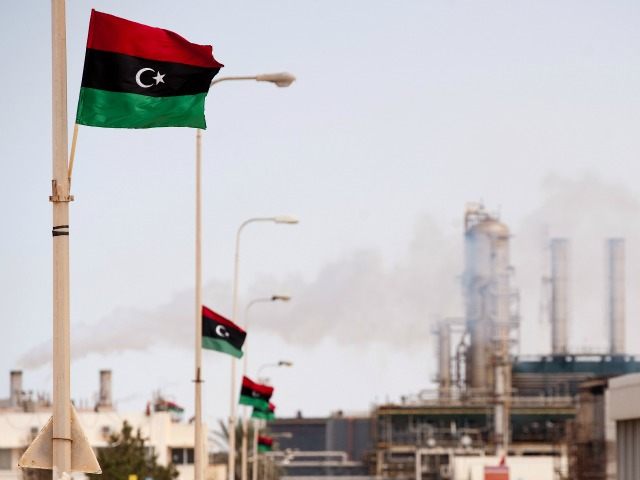 In 2011, the North Atlantic Treaty Organization (NATO) secured the approval of the United Nations Security Council to intervene in Libya to prevent Muammar Gaddafi from slaughtering civilians. Gaddafi was in the midst of a widespread revolt after he used violence against demonstrators that were inspired by the Arab Spring, which by that point rocked Tunisia and Egypt. However, NATO quickly moved from protecting civilians via no fly zones to regime change and in October 2011, anti-government rebels caught up to Gaddafi and executed him. Although President Obama wanted to avoid another Iraq, that is what transpired in Libya except this time no U.S. forces were committed to postwar reconstruction. Instead, Libya gradually devolved into political in-fighting and civil war and much like Iraq and Syria today, the country is under threat from the Islamic State, which is attempting to establish a foothold in the North African country to strike out at Libya’s neighbors and across the Mediterranean at Europe. Last week, in a speech at the National Defense University in Washington, President Barack Obama said that the biggest mistake of his presidency was not planning the reconstruction of Libya better, but there are some signs that things could improve. For example, the leader of a UN-approved government, Fayez al-Serraj, arrived last week to serve as Libya’s new prime minister and quickly won over some Tripoli militias and the loyalty of the heads of the central bank and national oil company. Still, al-Serraj has a tough road ahead of him to get Libya running smoothly again and he must handle militias, win over opposition legislators, and secure more economic support from the West so that Libya does not become a “Somalia on the Mediterranean” that Western policy analysts most fear.
This topic brief will highlight some of the major people and vocabulary that extempers should know when talking about Libya’s problems, explain what those problems are, and then analyze what steps al-Serraj needs to take immediately to put Libya on a more stable foundation.
Readers are also encouraged to use the links below and in the related R&D to bolster their files about this topic.
Read More



 1. Should the Rio Olympics be postponed?
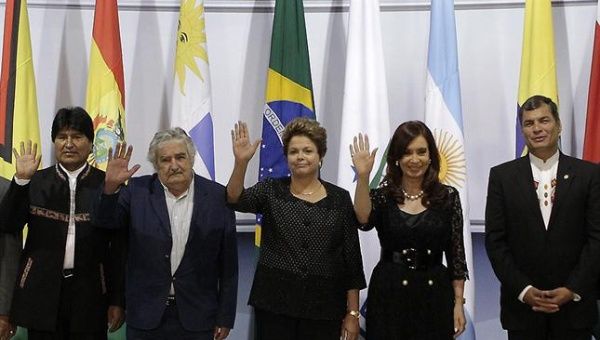 For the past decade and a half, leftist politicians in Latin America were elected at a higher rate than their conservative counterparts. These leftist leaders, which included Venezuela’s Hugo Chavez, Brazil’s Luiz Ignacio Lula da Silva, Bolivia’s Evo Morales, and Argentina’s Cristina Fernandez de Kirchner, all campaigned on promises of enlarging the welfare structures of their respective states and some, including Chavez and Morales, made moves to nationalize elements of the national economy to better distribute resource wealth to their people. However, falling global demand for commodities, in addition to corruption scandals and poor policy decisions, have created a gradual backlash against leftist leaders in the region. Whereas once it was great to rail against “neoliberal” economic policies and American influence, voters in Latin America have begun to give free market, conservative leaders an audience due to economic downturns, anxieties about the fiscal soundness of some Latin American nations, and shortages of vital consumer goods (notably in Venezuela).
 Although the Cold War has been over with for decades one of its proxy conflicts persists. The Korean Peninsula today remains divided between a democratic, capitalist South Korea and a totalitarian, communist North Korea, with both sides technically still at war since an armistice ended the Korean War from 1950-1953. The United States still bases more than 30,000 troops in South Korea, anticipating a North Korean attack due to threats made by current and past leaders, notably King Jong-un and his father Kim Jong-il. What makes North Korea’s bellicose rhetoric concerning is that it has enhanced its nuclear capabilities since the 1990s. The international community has worked to punish the North for this activity, but the regime has persisted and analysts worry that its missile technology is steadily improving, with some worrying that one day the North might have the ability to target Hawaii, Alaska, or the West Coast of the United States. Nevertheless, are worries about North Korea, a regime that struggles to feed its own people, justified? It is not uncommon for extempers to make such calculations in rounds concerning East Asia or foreign policy and that is what this topic brief will attempt to help with.
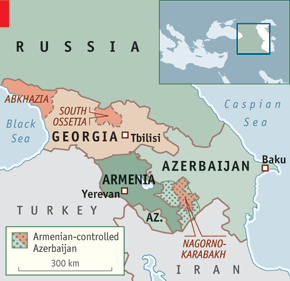 Last weekend fighting resumed between Armenian separatists and Azerbaijan-backed forces in the disputed region of Nagorno-Karabakh. The remote territory, located within Azerbaijan territory, is largely Armenian in ethnic composition and since 1994 it has been controlled by rebels that wish to detach it from Azerbaijan and make it an independent entity. Azerbaijan has long wished to regain it, but anxiety about how a takeover would be perceived by Armenians in the area, as well as the strong defensive position of separatist forces has prevented it from taking action up to now. Why the current fighting began is still a mystery as both sides accuse the other of taking offensive action first. While it would be easy to dismiss the conflict as a local affair, Turkey and Russia, both of whom are still smarting over a confrontation in Syria last fall, back opposite sides in the conflict, with Turkey casting its lot behind Muslim Azerbaijan and Russia having a defense treaty with Christian Armenia. Although the conflict appeared to be winding down as of the time of this brief, it could flare up again in the near future and create much more instability in Europe’s borderlands.
 On March 22 the Belgian capital of Brussels was rocked by two suicide attacks. One took place at the American Airlines counter at Zaventern airport and the other took place at a nearby subway station. As of the time of this brief, at least thirty-one people were reported killed and another 270 were reported wounded. The Islamic State quickly claimed responsibility for the attacks and investigators wonder if there was a link between the attack and the arrest of Salah Abdeslam, considered the lone survivor of the Paris terror attacks last year. Belgium has acquired a reputation as a terror hotbed of Europe, with militants using Brussels and other Belgian cities as planning centers for other attacks throughout Europe and the world. The attacks will likely cause the Belgian government to bolster its security infrastructure and rethink some of its policies regarding the integration of immigrants from Islamic nations. And the attacks will likely bolster a right-wing critique of existing security policies within the European Union (EU) that they say make the continent more vulnerable to attack.