Category: International Extemp Page 54 of 59

Extemp Questions for the Week of December 9th-15th, 2008

questions1.  Is Somalia the next Afghanistan?

2.  Does the print news industry deserve a government bailout?

3.  After an outbreak of violence by Zimbabwe’s army, is Mugabe’s regime in its final days?

4.  Is the world closing in to becoming victorious over the AIDS virus?

5.  Will the raid by British authorities over Damian Green make the British public resistant to future laws that encroach on their civil liberties?

6.  What can Hugo Chavez do to reduce Venezuela’s homicide rate?

7.  Why is Greece seeing an outbreak of riots?

8.  What was President Bush’s biggest foreign policy accomplishment?

9.  Is Nepal’s decision to close down its private schools misguided?

10.  Will Obama’s economic plan work?

Topic Brief: Stephen Harper’s Minority Government

While Canadian politics is not a topic that extempers are accustomed to speaking about at great length, the last month has slowly began to change that evaluation.  Loyal readers of the SpeechGeek HOTtopics services know that several weeks ago I wrote a topic brief concerning the outcome of the Canadian elections, elections which strengthened the Conservative Party but denied Canadian prime minister Stephen Harper a majority government.  While analysts debated how long Harper’s government could hold on, and my earlier topic brief indicated that the government would last until the summer, just several weeks into its term the government has been thrown into a crisis, as opposition parties have unified to oust Harper and the Conservative government from power.

Due to the fact that extempers may not be as aware as the rules for a parliamentary government that would allow for such a change to take place and because this political drama is practically unheard of for Canada, I thought that it would be important to resist the Canadian political situation in this week’s brief.  This brief will provide some background of what led up to this recent political crisis and what the latest developments are, how parliamentary procedure allows this to occur, and what the future of Harper’s current government looks like.

Extemp Questions for the Week of December 2nd-8th, 2008

questions1.  Should the Senate intervene in the Minnesota Senate race?

2.  Why is California in a fiscal emergency?

3.  Should Britain join the euro?

4.  To the U.S.:  Is Turkey important??

5.  Should Obama have campaigned for Martin?

6.  What impact will the banning of the PPP have on Thai politics?

7.  Are African nations coddling Omar al-Bashir?

8.  What impact will the Mumbai attacks have on Indian politics?

9.  Why did Obama keep Gates?

10.  After eight years, what grade does the Bush administration deserve on its environmental report card?

Topic Brief: The Mumbai Attacks

Over Thanksgiving break, the world was gripped by the coordinated terrorist attacks throughout the city of Mumbai, formerly known as Bombay, in India.  Mumbai is India’s financial capital and is a city that is gradually representing India’s rise as a global player.  The recent violence, though, has shocked Indians to their core and caused doubts in the international community as to the effectiveness of the war against al-Qaeda and its followers.

The attacks, which claimed 174 people as of this briefing, were carried out by ten gunmen.  Nine of those gunmen were killed when Indian forces raided the three major targets of the terrorist forces:  the Taj Mahal hotel, the Oberi-Trident hotel, and a Jewish community center.  The one gunmen who was caught alive and interrogated has said that the group received training in Pakistan, a fact that is bound to upset the already tense relationship between India and Pakistan.

This briefing will give a brief summary of the attacks, the implications for the India-Pakistan relationship, and what these attacks mean for India’s future.  It is with these facts that extempers can start to sift through the information that has been published about the attacks and start to create a grounded understanding that can aid them in rounds this week.

Extemp Questions for the Week of November 25th-December 1st, 2008

questions1. Do Obama’s cabinet appointments echo his campaign’s message of “change” or do they simply create a Clinton restoration?

2. Why are countries wary of an IMF bailout?

3. Can a resolution to the conflict in Kashmir bring stability to Afghanistan?

4. Was Tom Daschle a better selection for Secretary of Health and Human Services than Howard Dean?

5. How can the U.S. improve civic education?

6. Was the government bailout of Citigroup justified?

7. Should Barack Obama make cuts in the defense budget?

8. Have the Venezuelan local election results provided Hugo Chavez with some needed political momentum?

9. How should the world bring Somali pirates to justice?

10. Will low oil prices now lead to a supply crunch later?

Extemp Questions for the Week of November 18th-November 24th, 2008

questions1. Does the situation in the Democratic Republic of the Congo warrant intervention by neighboring African states?

2. Should the international community launch a joint naval mission to protect commerce off of Somalia’s coast?

3. Why did Jerry Yang leave Yahoo?

4. Should the Republican Party stop its opposition to the auto industry bailout?

5. Is centrism growing in Latin America?

6. What should be Barack Obama’s first priority as President?

7. Is the world forcing Tibetans to become more violent in their struggle with China?

8. Are proposed constitutional changes in Russia necessary?

9. How should the Supreme Court rule in Pleasant Grove City v. Summum?

10. Will the Democrats achieve a filibuster proof majority in the Senate by the end of December?

Extemp Questions for the Week of November 11th-November 17th, 2008

questions

1. Was the selection of Rahm Emanuel as White House Chief of Staff a good decision by Obama?

2. Should the government rescue GM?

3. Why did McCain lose?

4. Is the EU’s policy toward Russia too weak?

5. Should Michael Steele become the next RNC chair?

6. Will China’s economic stimulus plan work?

7. Should the British government expand Heathrow?

8. Why is Pakistan struggling to dislodge the Taliban?

9. Is Google emerging as Big Brother?

10. What should the Republican Party do to gain seats in the 2010 midterms?

Extemp Questions for the Week of November 4th-November 10th, 2008

questions1. What was the biggest upset on election night?

2. Why is Pakistan’s economy in such a wreck?

3. What does the Christian Science Monitor’s decision to go completely online say about the future of the print news industry?

4. Are natural resources a curse for the Congo?

5. Is Burma becoming more aggressive towards its neighbors?

6. Should the U.S. auto industry be given a bailout?

7. Will Livni need religious parties to form a government if she wins the upcoming Israelis elections?

8. What is the best way for the U.S. government to control healthcare costs?

9. Will Sarah Palin run for president in 2012?

10. Is the GOP in danger of becoming a regional party?

Extemp Questions for the Week of October 28th-November 3rd, 2008

1. Has Pennsylvania become the most pivotal battleground state in the presidential election?

2. Why was Livni unable to form a government?

3. Would Congress be more bipartisan with substantial Democratic majorities?

4. Who should Zambia choose as its next president?

5. Why is it so hard to reform the Mexican oil industry?

6. Are Amnesty International’s criticisms of Colombia’s security forces justified?

7. Should Iran pre-emptively strike Israel?

8. Why does the EU not like Italy’s immigration laws?

9. To the U.S.: Should Sudan matter?

10. Why do some Afghans prefer Taliban rule?

Extemp Questions for the Week of October 21st-27th, 2008

1. Why is Obama’s lead in the polls shrinking?

2. Will California voters pass Proposition 8?

3. Would a new stimulus package help the U.S. economy?

4. Has the oil bubble burst?

5. What does the Powell endorsement mean for Obama?

6. How long will Harper’s minority government last?

7. Will Zimbabwe’s new political crisis achieve a quick resolution?

8. Why are Central Asian countries facing food shortages?

9. How would a Democratic controlled, filibuster-proof Senate mean change the United States?

10. Why has Sarkozy become a key figure on the global economic crisis?

Topic Brief: 2008 Canadian Elections

Background

With most extempers worried about how the U.S. elections are going to turn out , many might have missed the news about the Canadian elections that happened last Tuesday.  The Canadian prime minister Stephen Harper, the leader of the Conservative Party, called the elections in the hopes that he could lead his party to a majority of seats in the Canadian parliament.  The Conservative Party had ruled the country for the last 32 months, but had done so from minority status, which makes it difficult to survive votes of no confidence and pass budget and other procedural matters.

Building majority governments has grown difficult in Canada where a parliamentary system that does not use proportional representation has grown skewed because the country has seen a political shift from a two party structure to a five party structure.  Harper’s Conservative Party is part of this political shift, created in 2003 in a merger between the Progressive Conservative Party and the Canadian Alliance.

Topic Brief: Syria and Iran as Agents of Change in the Middle East

topicbriefBy Omar Qureshi

The Middle East has long been an area of major misunderstanding for the west. Whether it is the volatile nature of popular will in Iran or the legacy politics in Syria there doesn’t seem to be a clear, general regional trend. The challenge of this understanding has led to many different foreign policy approaches towards the region as a whole. Regardless of whether it has been Clinton’s “aesthetic peace policy” or the much more expansive “Bush Doctrine” of preemptive war, these policies are specifically developed for the Middle East. Moreover, these policies have embraced the 1975 idea of Pax Syriana. This term literally means “Syrian peace,” but international relations theorists have taken it to mean the attempted reshaping of the Middle East to the desires of major actors. Clinton wanted peace- or at least the appearance of peace and George W. Bush wants to develop strategic alliances backed by hard power- a move that has substantially disenfranchised the Middle East on the whole. The preeminent actors in the Middle East today are Syria and Iran.

Topic Brief: South African Politics

topicbriefBy Logan Scisco

Background

Over the last several weeks, international extempers have most likely read about the recent political developments in South Africa, arguably the strongest power on the African continent.  For those extempers that have not had a chance to catch up on these developments, Thabo Mbeki is no longer president of the country.  After a prolonged political struggle between Jacob Zuma, who was Mr. Mbeki’s deputy president (a position most akin to vice-president in the United States) and who deposed Mr. Mbeki as leader of the African National Congress (ANC) in December, it appears that Mr. Zuma has won.  This victory came within the span of a month when Mr. Zuma was first acquitted of fraud and corruption charges based on a judicial technicality.  The National Prosecuting Authority (NPA), the body of the South African judiciary who initiates criminal cases for the government, was said in the dismissal of the charges to have been influenced in its prosecution by Mr. Mbeki and his supporters.  This finding by the judge overseeing Mr. Zuma’s case gave weight to charges, long echoed by Mr. Zuma’s supporters, that Mr. Mbeki has been an overzealous president who has been intolerant of political opposition and that Mr. Mbeki has been willing to use the instruments of the state to clamp down on this dissent.  On September 20th, the ANC decided that Mr. Mbeki should resign his post in order to end the political struggle that has gripped the country for three years.

Having set the background, this brief will give an overview of the structure and history of South Africa’s political system, the current state of the government, and what challenges that government faces in the future.

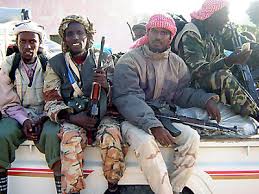
Topic Brief: Somalia (2008)

Background

With the seizure two weeks ago of the MV Faina, a Ukrainian freighter, by Somali pirates in the Gulf of Aden, the world and its press have suddenly rediscovered the problems that exist in Somalia.  Piracy off of Somalia’s waters is hardly a new phenomenon and is increasing on a yearly basis, with the international community too divided or apathetic to achieve a joint solution to the problem.  What makes the seizure of the MV Faina important was that according to The Economist on October 4, 2008, the Faina had been equipped with anti-aircraft guns, grenade launchers, light weaponry, and 33 T-72 Russian tanks.  Analysts fear that the pirates may have been able to ship much of the lighter weaponry to their allies in Somalia, although the chances of them being able to use the bigger weapons on board are slim.  The seizure also has geopolitical implications in Africa, as the tanks on board were supposedly bound for southern Sudan, which is watching the clock and waiting for an opportunity to declare independence from Muslim-dominated northern Sudan in 2011.

Over the last two decades, Somali has had a very turbulent history, racked by civil wars and clan violence.  Experienced extempers might note that they have had to focus on Somali before, when Ethiopia invaded the country to crush Islamic rebels in 2006.  Today, extempers will need to focus on Somalia because the worsening political situation in the country has ramifications for the east Africa region as well as for the war on terrorism in the United States.  Furthermore, the topic of Somali piracy is sure to emerge in question sets over the next month due to the fact that the world is trying to clamp down on surging pirate attacks, which threaten commerce in the Gulf of Aden, which has ten percent of the world’s shipping.

This brief will seek to provide extempers with some historical background about Somalia as well as briefly discuss several of the problems the country faces in the near future.

Extemp Questions for the Week of October 14th-20th, 2008

1. Is the bailout package working?

2. Should Ethiopia withdraw from Somalia?

3. Will a new Ukranian election increase Yushenko’s power?

4. Should Khatami challenge Ahmadinejad?

5. How would an Obama administration change U.S. policy towards Israel?

6. Should the U.S. and China cooperate on climate change policy?

7. Is McCain finished?

8. Will California’s budget have to be renegotiated?

9. In these economic times, can America weather a tax increase?

10. How pertitent are ACORN’s activities to this year’s presidential election?

Page 54 of 59

Powered by WordPress & Theme by Anders Norén