


[fblike]
 Last year, American officials, including President Barack Obama, cited Yemen as an example of a nation that was successfully fighting terrorism. However, 2015 has not been kind to the Arab world’s poorest country. Last month, Shi’ite Houthi rebels kidnapped the Yemeni President’s chief of staff and seized the presidential palace. This led to the resignation of President Abdu Rabbu Mansour Hadi, who has now been placed under house arrest. The nation’s parliament has also been dissolved and the United Nations warns of that a civil war could be looming because the Houthis are a minority that cannot command allegiance from other areas of the country. Anti-terrorism experts warn that the country’s Sunni majority may swear allegiance to Al-Qaeda in the Arabian Peninsula (AQAP) in an attempt to overthrow the Houthis. This could complicate American efforts to suppress AQAP, which has targeted Western airliners in recent years and trained one of the attackers of Charlie Hebdo.
This topic brief will provide some background on Yemen’s troubled history and those involved in the current political crisis, explain recent events that have transpired in the country, and then provide some scenarios of how continued instability could affect Western anti-terrorism efforts and regional stability.
Readers are also encouraged to use the links below and in the related R&D to bolster their files about this topic.
 In 1998, British doctor Andrew Wakefield published a study in the British medical journal The Lancet that linked the measles, mumps, and rubella (MMR) vaccine to autism. Wakefield’s finding accelerated the growth of the anti-vaccine movement, which denies that vaccines are medically beneficial and claims that they only bolster big pharmaceutical companies. Despite the discrediting of Wakefield’s findings in 2010, suspicions of the MMR vaccine have taken on a life of their own and certain pockets of the United States have large groups of families who have chosen not to vaccinate their children. As a result, measles, which health authorities claimed had been eradicated in the United States in 2000, is making a comeback. In January, an unvaccinated woman at Disneyland in California caused measles to spread to more than one hundred people, and fears of widespread disease outbreaks due to people not being vaccinated has caused a political firestorm. As a result, extempers should be prepared to talk about the vaccination issue in future rounds.
 Five years ago, Greece’s sovereign debt problems nearly brought down the eurozone. In February 2010, the country found itself unable to pay its creditors and was forced to turn to the European Union (EU) and the International Monetary Fund (IMF) for aid. As a euro user, Greece was required under the Maastricht Treaty of 1992 to keep deficits below 3% of its GDP and to keep its public debt below a 60% ceiling. However, Greek political officials concealed the true state of their budget situation with the help of American investment bank Goldman Sachs. This allowed them to join the eurozone and borrow at low interest rates. When the true size of Greece’s debt was revealed, panic swept European markets, especially those of heavily indebted countries such as Portugal, Italy, and Spain. The fear was that if Greece failed to pay its debts that other indebted European countries, all of whom are euro members, would as well. To calm markets, the so-called Troika of the EU, the European Central Bank (ECB), and the IMF stepped in and funneled billions of dollars in loans to the Greek government. This assistance required painful austerity measures, which caused Greece to increase taxes and reduce public spending. The austerity measures have been very unpopular in Greece and two weeks ago, on January 25, the Greek populace elected the far-left SYRIZA Party, which opposes austerity. New Prime Minister Alexis Tsipras has vowed to not follow the conditions imposed by the Troika and is seeking a restructuring of Greece’s external debt. Analysts warn that SYRIZA’s position puts it on a collision course with powerful EU nations such as Germany and that Greece’s recent election might take it out of the eurozone.
 On January 20, President Barack Obama delivered his constitutionally required State of the Union address to Congress. In it, he said that America was on the road to economic recovery, having escaped the perils of the 2008 financial crisis, and he announced that Americans had turned the page in the war against terrorism. The President also announced his drive to provide two years of free community college to millions of Americans, increase taxes on the wealthy, and give mandated paid sick leave to working Americans. The Republican rebuttal was delivered by newly elected Iowa Senator Joni Ernst, who said that the President needs to take the threat from the Islamic State more seriously, that more needed to be done to thwart cyberterrorism, and that Americans should have more freedom to achieve the American dream. Political pundits saw the State of the Union as an attempt by President Obama to lay out the political platform for his successor in 2016, while others saw it as an attempt by the President to rejuvenate his administration and avoid lame duck status. While there is little chance of many of President Obama’s domestic initiatives becoming law in 2015, extempers should still be aware of what the President said in the State of the Union because it is usually a good benchmark to assess the success of a presidency in any given year.
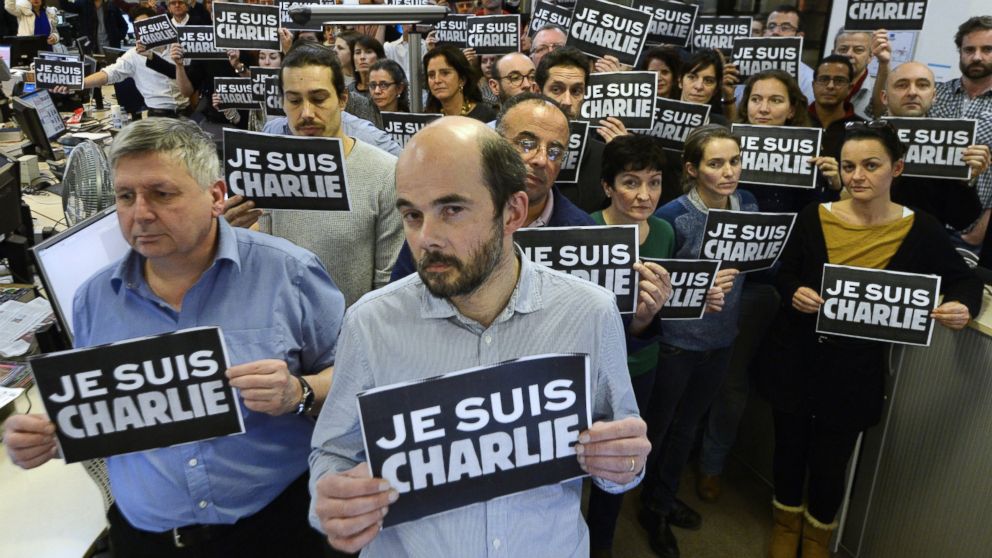 Two weeks ago on January 7, two gunmen stormed into the offices of Charlie Hebdo, a satirical French magazine, and proceeded to kill eleven people and a police officer. The gunmen, Cherif and Said Kouachi, were French citizens with Islamic beliefs and their grievance against Charlie Hebdo was the magazine’s cartoons of the Prophet Muhammad, who cannot be depicted per the tenets of the Islam. Over the next two days, French police tracked down and killed the Kouachi brothers, while one of their accomplices, Amedy Coulibaly was killed after taking a kosher supermarket hostage. Coulibaly killed four hostages and one policewoman before being neutralized. The string of attacks shocked the French public, with many seeing the attack on Charlie Hebdo as an assault on the country’s traditions of freedom of speech and expression. On January 11, an estimated 1.3 million people went into the streets of Paris to march against the violence, which included more than forty heads of state. The attacks have presented President Francois Hollande with an opportunity to bolster his reputation among French voters, which has eroded over the last year due to a sluggish economy. However, the attacks may serve to galvanize support for the French far-right, namely the National Front (FN), which has argued for immigration controls and against what they deem as the “Islamization” of France.
 Two weeks ago, the North Atlantic Treaty Organization (NATO) ended Operation Enduring Freedom in Afghanistan. Beginning shortly after the September 11 terror attacks, Operation Enduring Freedom produced the fall of the Taliban government, scattered remnants of the al-Qaeda terrorist network, and attempted to provide protection and humanitarian assistance to the Afghan people. Operation Freedom’s Sentinel will replace Operation Enduring Freedom, with the United States leading a contingent of 13,000 foreign troops who will continue to provide training and intelligence services to Afghan security forces and support for counterterrorism operations. President Barack Obama has called for a drawdown of all American forces from Afghanistan by 2016, with only 1,000 remaining in a non-combat capacity. However, 2014 was the deadliest year on record in Afghanistan as more than 5,000 Afghan troops and 10,000 civilians were killed. Since the American withdrawal from Iraq in 2011 produced the rise of the Islamic State, opponents of the President’s drawdown plan argue that the same fate could befall Afghanistan, thereby erasing the gains that NATO troops made since 2001. New Afghan President Ashraf Ghani has also expressed hesitation about the withdrawal of more American and foreign troops from Afghan territory, warning last week that a future withdrawal should be based on mutual interests and not rigid timetables.
 As 2014 draws to a close, one of the biggest news stories is the growing American economy. While the U.S. economy officially exited from the Great Recession in June 2009, Americans have remained pessimistic. They worry about whether the economy will continue to be robust for future generations, how there are still a large number of part-time workers that wish they could work full-time, and the impact of globalization and immigration on job growth. Last week, the Commerce Department revised its third quarter numbers for America’s gross domestic product (GDP). It found that the economy grew by 5% between July and September, which is the largest quarter of economic growth that the country has experienced since 2003. A rise in exports, falling oil prices, and enhanced consumer spending accounted for the figure and economists are optimistic that America’s economy is heading toward a period of sustainable growth. Since extempers will face questions about the U.S. economy several times at various tournaments in the second semester, Extemp Central thought it was proper to provide a topic brief breaking down America’s economic performance in 2014 and assess its prospects for 2015.
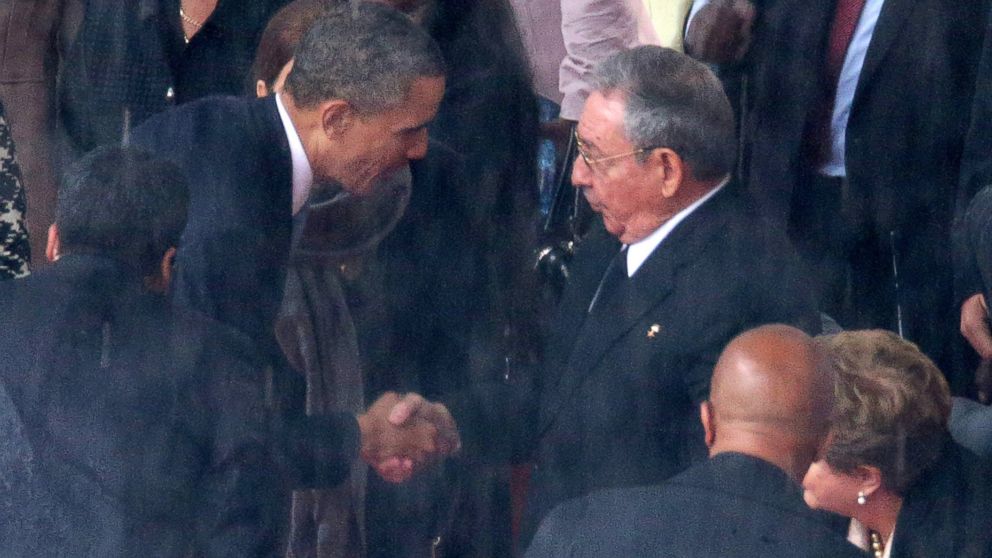 Since 1960, the United States has maintained an economic embargo on Cuba, an island nation just ninety miles off the coast of Florida. The embargo was an instrument of Cold War policymaking, as Cuba became a communist nation under Fidel Castro and seized American economic assets without compensation. Even after the Cold War ended, the United States maintained the embargo as a political instrument in hopes of weakening the Castro regime. However, in the 1990s and 2000s, the embargo came to be seen by other Latin American nations as an unjust extension of American imperialism and some pundits allege that the embargo came to isolate the United States from the rest of the Western Hemisphere just as much as the embargo isolated Cuba from the American mainland. Last week, President Obama announced that he was taking executive action to weaken the long standing Cuban embargo and that he would move to normalize relations with Cuba. The President’s action received bipartisan support from those who believe that the embargo harms America’s relations with other Latin American nations, yet also received bipartisan criticism for rewarding a dictatorial regime that abuses the rights of its citizens. The President’s actions have forced 2016 presidential contenders such as Hillary Clinton, Rand Paul, Jeb Bush, and Marco Rubio to weigh in on the issue and depending on how well the President’s normalization push goes, it could become a significant issue in the Republican presidential primaries and the 2016 general election.
 Since June, the price of oil has plunged 40% on the international market in response to economic slowdowns in Europe and Asia and a glut of supply from the Middle East and North America. The falling price of oil, near $60 a barrel at the time of the writing of this brief, has been a boon for nations that import fossil fuels. It also provides much needed stimulus for consumer-driven economies such as the United States as people are able to take the money they would normally spend on high gas prices and direct it to other economic activities. However, the falling oil price has worked against some economies that rely largely on the proceeds from oil exports. Countries such as Venezuela, Russia, and Nigeria, among others, are now left wondering how they will react to the sudden fall of global oil prices and the decisions that they make could determine whether their current governments survive.
 After existing for twenty months Israel’s coalition government has collapsed. Prime Minister Benjamin Netanyahu held a press conference last week to announce the firing of Justice Minister Tzipi Livni and Finance Minister Yair Lapid on the grounds that they were insubordinate and plotting behind his back. Livni and Lapid were the two moderate members of Netanyahu’s Cabinet and their dismissal removes their political support for his coalition, thereby necessitating that new elections be held. Israeli voters went to the polls to create Netanyahu’s existing coalition in January 2013 and now, in the Israeli tradition, they will head back to decide whether Netanyahu deserves a fourth term, which is the one defining issue of the race thus far. The elections are tentatively scheduled for March, with March 17 looking like the probable election date.
 When he assumed office in December 2012 Japanese Prime Minister Shinzo Abe pledged a radical course of action to deal with Japan’s economic downturn. Since 1990 the world’s third-largest economy has been plagued by deflation and sagging consumer confidence creating what Japanese policymakers call the “Lost Two Decades.” Abe’s program, dubbed “Abenomics,” called for a combination of expansionary monetary and fiscal policy and structural reform. Throughout 2013 the Japanese economy showed signs of recovery and inflation was moving upwards, but Abe’s decision to increase the country’s consumption tax from 5% to 8% in April has produced the country’s fourth recession since 2008. In response to disappointing economic numbers, Abe announced last week that he is postponing a future increase in the consumption tax until 2017 and he called for new parliamentary elections next month. He justified his call for new elections by saying that he needed a mandate from voters to continue his economic program and pledged to resign if his Liberal Democratic Party (LDP) coalition did not win. Although the LDP is expected to triumph in next month’s vote, analysts question whether Abe has the stomach to continue major economic reforms in light of Japan’s recent recession and some criticize the upcoming election as a useless exercise.
 Last Thursday President Obama announced that he was taking executive action to resolve part of the nation’s pressing illegal immigration problem. The President’s executive order will allow up to five million illegal immigrants to obtain work permits, thereby allowing them to legally stay and work in the United States for the next three years. This is nearly half of the country’s illegal immigrant population, which is estimated to be more than eleven million people. The President’s defenders argued that executive action had to be taken because Congress has failed to solve the illegal immigration problem over the last several decades, but opponents argued that the order was an abuse of executive power and that it would harm bipartisan cooperation for the next two years on Capitol Hill.
 To say that this year’s midterm elections were a disaster for President Obama and the Democratic Party would be an understatement. Undecided voters broke for the Republican Party in droves, enabling it to capture the Senate for the first time since 2006, increase its House majority to near historic levels, and preserve control of governor’s mansions across the country. For the next two years, the Republicans and President Obama will be engaged in a Cold War-style faceoff on Capitol Hill, with each side trying to position the other as obstructionist ahead of the 2016 presidential election. Since the new Congress will not be seated until January, extempers can expect to draw questions about the lessons each party can learn from the midterms and how President Obama should respond to the results.