


[fblike]
 Today’s R&D covers the International Criminal Court (ICC). Founded in 2002, the ICC puts individuals on trial for war crimes and crimes against humanity. Over 120 nations belong to the ICC, but the United States is not a member, having never ratified the Rome Statute. The ICC has been criticized in recent years by African leaders as unfairly targeting their continent, and it recently drew the ire of the international press for shelving the trial of Kenyan President Uhuru Kenyatta due to a lack of evidence.
Raising the Bar: The International Criminal Court Deserves Supremely Qualified Judges http://t.co/GU7t7BL9dl via @theworldpost
— Catherine Jenkins (@CathyJenkins101) September 10, 2014
Uhuru case stalls as #Bensouda runs short of evidence http://t.co/QKxV2O6VHX
— Daily Nation (@dailynation) September 6, 2014
#Palestinian leaders abandon US peace-brokering, decide to bring grievances to #International #Criminal #Court http://t.co/5QtdIaGQF9
— A_G_Moore (@A_G_Moore) September 3, 2014
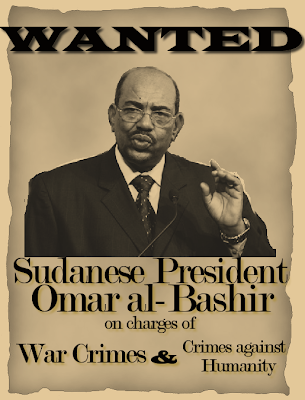 The International Criminal Court (ICC) issued its largest arrest warrant to date when last Wednesday they targeted Sudanese President Omar al-Bashir on charges of war crimes and crimes against humanity for actions that have taken place in Sudan’s Darfur region from 2003-2008. Bashir is alleged to have provided support and ordered the violence in that region of the country which has left over 300,000 people dead and displaced up to 2.5 million people. Due to the actions of Sudan’s Arab population in killing blacks farmers in Darfur, there has also been charges of genocide leveled against Bashir’s regime, although the ICC decided not to issue an arrest warrant with that charge attached.