
by Logan Scisco
 In the United States, the Democratic Party is attempting to paint the Republican Party as mean spirited and warning voters that if the Republicans take control of Congress this November they will privatize Social Security. This tactic is meant to rally elderly voters, who vote more than any other group, to the polls on Election Day. Social Security is referred to as the third rail in American politics because it is such a deadly issue for politicians to confront. However, all experts agree that without changes in its structure, Social Security and America’s dreams of a government pension in old age are likely to go the way of the dodo.
Like the United States, government pensions were seen by European nations and their citizenry as sacred trusts whereby the government would provide for elderly citizens in their old age. Politicians who dared question the sustainability and cost of these pension programs were seen as anti-elderly and insensitive. However, rising budget deficits and crushing national debt burdens have finally forced European nations to deal with their aging populations. Some, like Great Britain, are confronting the problem voluntarily while others like Greece have been forced to reform their generous pension systems.
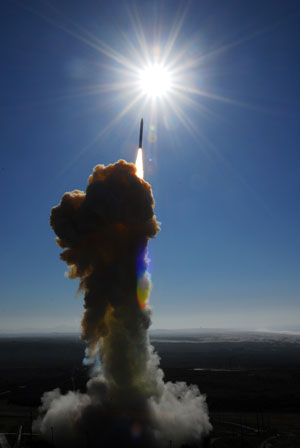 Last Friday, President Barack Obama opened a new chapter in U.S.-Russian relations by decided to adjust plans to place missile interceptors in Poland and an advanced radar system in the Czech Republic. Obama’s policy was likely fuelled by advice from the Defense Department, who had argued that such a system was not capable of meeting the defense needs of America or its allies in the region, and a belief that cooperation with Russia was needed to resolve pressing world problems, notably nuclear proliferation.
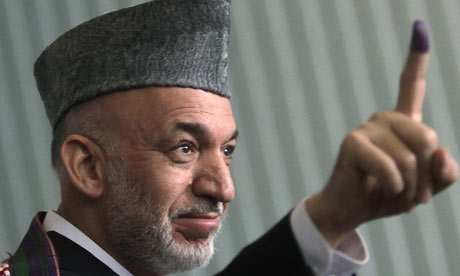 Two weeks ago, the nation of Afghanistan held its second presidential election since the U.S. invasion of the country in 2001. President Hamid Karzai was looking for another term in office against 39 other candidates, the most notable of which was Dr. Abdullah Abdullah, a ethnic Tajik who was a former foreign minister in the Afghan government. The election was seen as a measuring stick of how stable, or unstable, Afghanistan has become over the last several years.
 Extempers who are juniors or seniors this year might remember the protests that threatened the ruling government of Myanmar, a country also referred to as Burma by much of the international community, in the fall of 2007. These protests, led by monks and political dissidents of Myanmar’s military junta, were in response to the junta removing fuel subsidies but eventually acquired a more democratic flavor. However, this so-called Saffron Revolution was quelled by the beating, imprisonment, and killing of its participants and thus, Myanmar’s second attempt at acquiring a democratic government since 1962 failed.
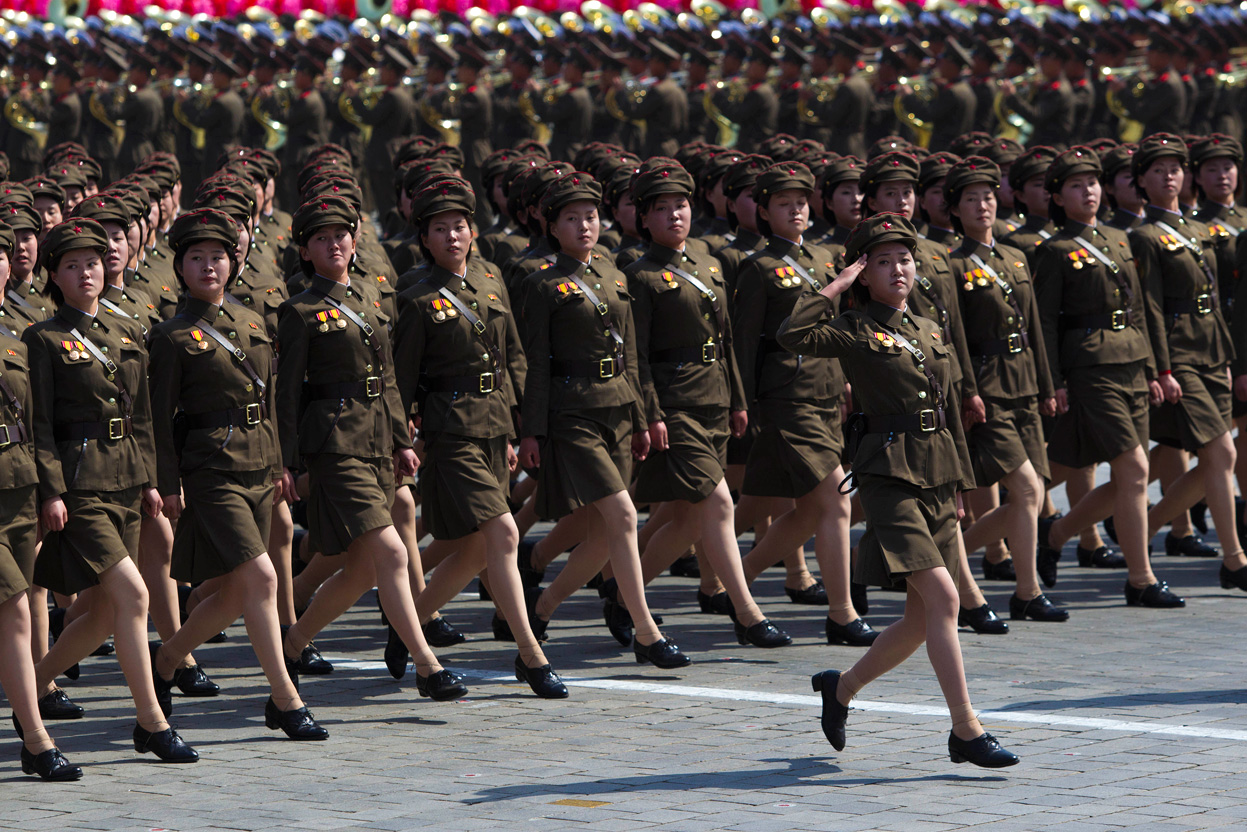 Early last month, North Korea angered the international community over its launch of a long range missile (Taepodong-2). This launch went against UN Security Council resolutions that ban North Korea from conducting ballistic missile tests, although North Korea’s government saw it as an attempted satellite launch, arguing that it had the right to explore space. This launch was determined to be a failure, with the second and third stages of the rocket failing to separate as planned. Despite this failure, North Korea appears to have gained international attention yet again, by conducting its second nuclear test.
 One international event that has brought about unified international outrage is the military offensive of the Sri Lankan government against the Liberation Tigers of Tamil Eelam (LTTE). Over the last two years, the Sri Lankan government has managed to corner the Tigers, a group that claims to be fighting for the islands Tamil minority and is labeled as a terrorist group by the United States and the European Union, into a narrow strip of land in the northern part of the country. The concluding offensive, which has the potential to end a military conflict that began in 1983, has put civilians in danger from both sides and there have been numerous calls around the world for the Sri Lankan government to enact a ceasefire with the Tigers so as to allow humanitarian assistance to best be brought to the civilians trapped in the conflict zone.
 The last several years have been fortunate for the world’s medical watchers. Fearing an avian flu pandemic across the globe several years ago, these experts have only had to watch the progression of the virus in isolated parts of the Eastern Hemisphere. Also, avian flu never became a human-to-human transmission problem, reducing the urgency required or the threat of avian flu becoming a global problem. However, the recent outbreak of swine flu, if it can be aptly called that since this strain of flu borrows from swine influenza, avian influenza (albeit not its most dangerous components), and human influenza components, which has infected nearly 1500 people globally at the time of this writing, can aroused fears that this is the next global flu pandemic. This is compounded by the fact that swine flu appears to be spreading from person to person, regardless of their contact with infected animals.
 By Sarah Anand
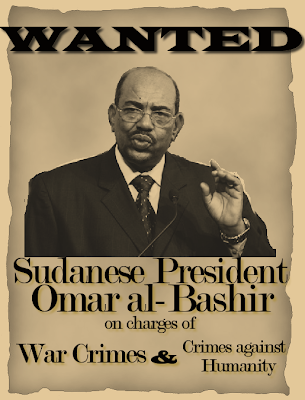 The International Criminal Court (ICC) issued its largest arrest warrant to date when last Wednesday they targeted Sudanese President Omar al-Bashir on charges of war crimes and crimes against humanity for actions that have taken place in Sudan’s Darfur region from 2003-2008. Bashir is alleged to have provided support and ordered the violence in that region of the country which has left over 300,000 people dead and displaced up to 2.5 million people. Due to the actions of Sudan’s Arab population in killing blacks farmers in Darfur, there has also been charges of genocide leveled against Bashir’s regime, although the ICC decided not to issue an arrest warrant with that charge attached.
 Russia’s decision on January 5, 2009 to cut gas supplies to European consumers via pipelines in Ukraine has sent shockwaves throughout the European energy community. The dispute between the two countries, centering upon geopolitical issues on Russia’s western border, has plunged some European nations into a new discussion about the safety and security of Europe’s energy policy of relying on Russia for natural gas. Russia’s President Dmitry Medvedev and Prime Minister Vladimir Putin are still trying to test the West’s resolve against a somewhat resurgent Russia and are acting more aggressively now that some spots of protest has risen against their rule at home in light of the current economic problems facing the world.
 When the incoming presidential administration of Barack Obama considered what foreign policy challenges they might face in the first few weeks of office, it is fair to say that the Israeli-Palestinian conflict was not at the top of the list. With international analysts warning of how close Iran is to having the capability to build a nuclear weapon and with the latest military moves by Pakistan along the Indian border, Obama’s transition team envisioned conflicts, but not one that has the potential to ruin much of the international goodwill Obama brings with him into 1600 Pennsylvania Avenue.
 While Canadian politics is not a topic that extempers are accustomed to speaking about at great length, the last month has slowly began to change that evaluation. Loyal readers of the SpeechGeek HOTtopics services know that several weeks ago I wrote a topic brief concerning the outcome of the Canadian elections, elections which strengthened the Conservative Party but denied Canadian prime minister Stephen Harper a majority government. While analysts debated how long Harper’s government could hold on, and my earlier topic brief indicated that the government would last until the summer, just several weeks into its term the government has been thrown into a crisis, as opposition parties have unified to oust Harper and the Conservative government from power.