


[fblike]
 Today’s R&D is brought to you by Prepd (pronounced “prepped”). Prepd is building debate technology that helps extempers and congressional debaters research, practice, and compete. Visit www.prepd.in to learn more.
This R&D covers the result of Italy’s constitutional referendum. A sizable majority of Italian voters, 59% in total, voted against Prime Minister Matteo Renzi’s package of constitutional reforms to weaken the Italian Senate and assist in more robust lawmaking powers by Italy’s central government. Renzi announced that he would resign as an outcome of the referendum, potentially plunging Italy into renewed political chaos and weakening the Italian government’s efforts to stabilize the nation’s economy.
Matteo Renzi loses Italian referendum: exit polls – Brexit, Trump, now Italy. Globalism is on the run! https://t.co/XsimUBtyJ1
— Mike Allen (@AMike4761) December 4, 2016
Sunday’s referendum results in Italy mark the sobering start for what could be a defining year for the EU https://t.co/rhDRfIVFH6
— Wall Street Journal (@WSJ) December 5, 2016
Italian prime minister Matteo Renzi’s departure could spell disaster for the EU https://t.co/QLwJ3n9IW9
— The Independent (@Independent) December 5, 2016


 On February 22nd, Florentine mayor and Democratic Party (DP) leader Matteo Renzi became the youngest Italian prime minister. Renzi, who is thirty-nine years old, has promised a series of reforms to shake up Italy’s dysfunctional political and economic culture. While never holding office on a national scale, Renzi believes that he can use his first 100 days in office to get Italy moving again and restore it to its proper place as one of the major powers on the European continent. However, old political and economic habits die hard and political observers, which include some of those in Renzi’s own party, feel that he is all flash and no substance. Considering the fact that Italy is the third largest economy in the eurozone and that its economy has not fared well over the last two decades, Renzi comes at a crucial time in Italian history. A successful administration could put Italy back on the road to economic growth and a more stable political system, but a failure could dishearten the Italian population and lead to populist leaders taking power from either the political left or the right.
 Here is today’s premium R&D to accompany
 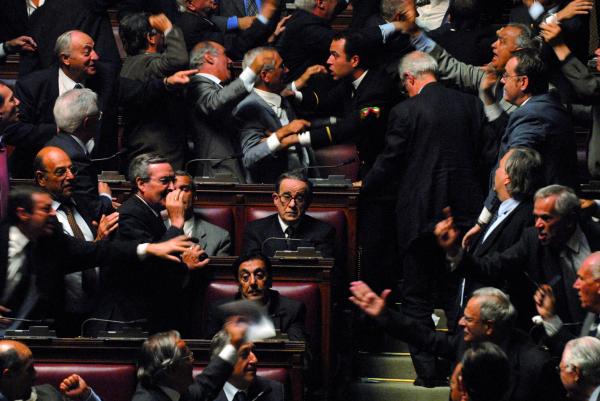 Today’s R&D covers Italian politics, where Prime Minister Enrico Letta survived a confidence vote this week after right-wing factions loyal to Silvio Berlusconi, a former prime minister, reversed course and endorsed the existing government. This R&D includes articles after Berlusconi backed off his threat and articles released hours before his decision, which allow extempers to weigh the causes of Italy’s recent political crisis, their possible ramifications, and where Italy is headed after the confidence vote.