

 Today’s R&D is brought to you by Prepd (pronounced “prepped”). Prepd is building debate technology that helps extempers and congressional debaters research, practice, and compete. Visit www.prepd.in to learn more.
This week’s R&D from Prepd covers President Biden’s nomination of Justice Ketanji Brown Jackson to the Supreme Court. Justice Brown, a graduate of Harvard Law School, is currently on the U.S. Court of Appeals for the D.C. Circuit. If confirmed, she would be the first African-American woman to serve on the Court. The Senate is expected to confirm Brown, who’s nomination cannot be filibustered as per Senate rules.
The Senate Judiciary Committee announced it will hold four days of hearings for Supreme Court nominee Ketanji Brown Jackson. https://t.co/rr9at04i3o
— U.S. News & World Report (@usnews) March 3, 2022
“One of the nation’s top legal minds, who will continue Justice Breyer’s legacy of excellence,” Biden says about his SCOTUS nominee, Judge Ketanji Brown Jackson, during the #SOTU.
Read about her here: https://t.co/kg48mf6YcC
— The Brookings Institution (@BrookingsInst) March 2, 2022
Ketanji Brown Jackson isn’t expected to need GOP votes to be confirmed to the Supreme Court.
But a handful of Republicans are torn over whether to cross party lines and vote for the first Black woman justice. https://t.co/QkV6BWlcuU
— POLITICO (@politico) March 3, 2022


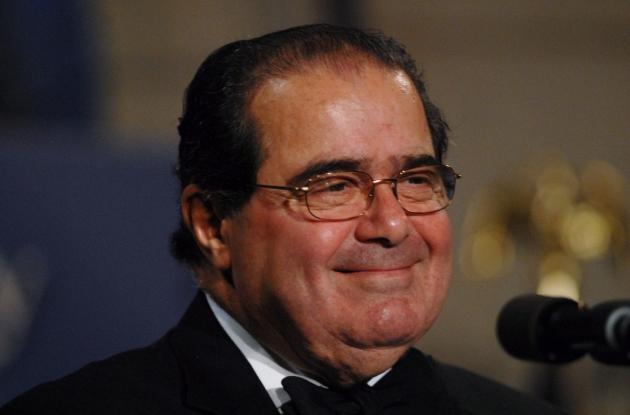 The passing of Supreme Court justice Antonin Scalia last Saturday in Shafter, Texas has thrown the nation’s political scene into turmoil. Shortly after Scalia’s death was announced, Senate Majority Leader Mitch McConnell said that he had no intention of allowing President Barack Obama to appoint a replacement and that voters in the next presidential election should have a voice in the process. Democrats and liberals decried the statement, arguing that President Obama has a constitutional right to appoint a new justice and that the Senate must give the nominee a fair and proper hearing. Since Scalia was the leading conservative on a divided court, a liberal or progressive replacement would move the Court to the left for the first time in more than thirty years. The calculations surrounding a new nomination battle could significantly affect the outcome of the 2016 presidential election, but it could also affect cases that are currently before the Court on hot button social issues such as abortion, the Affordable Care Act, affirmative action, and voting rights. As a result, Scalia’s death comes at an inopportune time for a dangerously divided country, and the looming confirmation of a new justice could be the most divisive showdown of a judicial nominee since Clarence Thomas was barely confirmed in 1991.
 Here is today’s premium R&D to accompany
  Last Friday, Supreme Court justice David Souter announced his retirement, pending the confirmation of a successor. Souter has been a liberal vote on the court, progressively moving in that direction since arriving to the Court in 1990. He was a former New Hampshire Attorney General, New Hampshire Supreme Court justice, and First Circuit Court of Appeals justice before serving on the highest court in the United States.