

 Shortly after getting Congress to pass his economic stimulus bill, worth $787 billion, Barack Obama has again presented Congress with his plan for the federal budget for next year. Under our constitutional system, the President has the responsibility to make the budget, but Congress must debate its proposals, amend it if they choose, and then vote on the final package. While the current version of Obama’s 2010 budget, worth $3.6 trillion, $1.2 trillion being borrowed, is not likely to stay in its current form, it nevertheless gives us insight into his presidential priorities and where he would like to take the country.
Not surprisingly, Obama’s budget, which combines new federal spending into education and healthcare programs along with tax increases on America’s wealthy and oil and gas industries, has provoked conservative opposition. It is for this reason that this brief is being written as the controversy over this budget is bound to follow extempers throughout the coming month, a month when state tournaments are on the horizon.
This brief will break down what Obama’s budget contains, criticisms of the budget (along with some arguments about why these criticisms are wrong), and the impacts this budget could have for America.
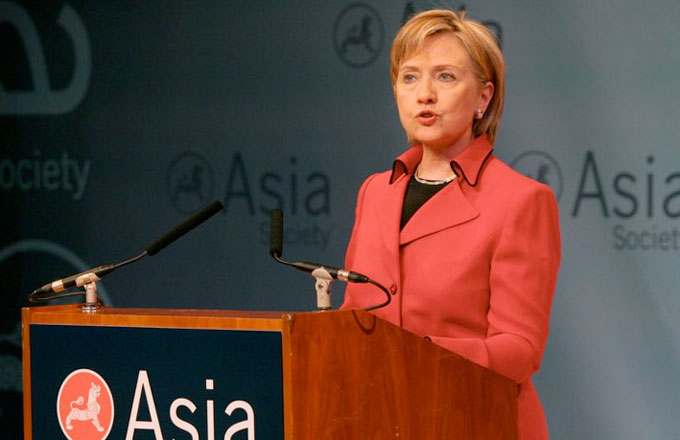 Ever since she joined Barack Obama’s cabinet as Secretary of State, insiders across the political spectrum have weighed in about Hillary Clinton’s intentions in taking the job. Was she coming on board to overshadow the new president? Was she going to try to use the position to increase her political clout and make another run at the White House in 2016, or potentially 2012 if Obama failed? Or was she going into the job in order to provide a valuable supplement to the Obama team in the foreign arena?
 Over the last week, the news concerning the state of the U.S. economy continues to be troubling. Unemployment rates stand at the highest they have been in twenty-five years, banks continue to suffer problems despite the federal government’s willingness to give them aid, there is still doubt and uncertainty over the fate of America’s automakers, the federal deficit is expected to climb, and the gross domestic product (GDP) of the U.S. shrinking 3.8 percent in the fourth quarter, the biggest such contraction in GDP since 1982.
 Just when the drama in Illinois concerning Rod Blagojevich seemed to be running out of steam in the national press, the controversial and indicted governor gave it new momentum by defying Senate Democratic leaders and state lawmakers and appointing Roland Burris, a former state attorney general and former political primary opponent, to Barack Obama’s vacant U.S. Senate seat.
 Last week, when it appeared that the Obama presidential transition would proceed as smoothly as possible in the midst of economic turmoil, two foreign wars, and a crisis of relations between India and Pakistan, the entire U.S. political climate was shaken to its core by the arrest of acting Illinois Governor Rod Blagojevich. The controversy has been a distraction for the incoming Obama administration and his transition team has been beating a quiet message for the media, while circling the wagons to prevent any negative political fallout. The incident has also put into question Obama’s economic plan, worth up to $1 trillion, and has the implication of eventually altering the makeup of the U.S. Senate, at a time when Democrats assumed that Obama’s successor would be a Democratic candidate.
 Domestic social issues are issues that extempers never want to discuss. Extempers dread walking into them and feel even worse after they have competed. Speaking on domestic social issues well is a fine balancing act between taking a moderate approach on issues, so as not to offend judges, and having a knowledge base that can cite specific examples of how approaches have worked in the past and could work better in the future.
 Extempers have been busy over the last several months trying to understand the different elements of the current financial crisis. In the midst of understanding credit markets, bond markets, the $700 billion U.S. bailout package, and deteriorating housing market, it was easy to ignore the problems of one of the most crucial industries of the U.S. economy: the auto market. Within the last several weeks, the problems of the auto industry’s “Big Three”, General Motors (GM), Chrysler, and Ford have become dire, as the auto companies say they have spent most of the $15 billion they held in reserve during the third quarter. Faced with slumping sales at home and in the midst of restructuring their operations, GM has warned that without government aid it will not be able to make it through the year and Ford has warned that it will not last long into 2009 without government aid.
 by Logan Scisco
 The 2008 elections, an election cycle some extempers have been speaking about for the last two and a half years has finally come to a close. The election result, unlike 2000 and 2004, was announced at the end of evening, with Senator Barack Obama of Illinois becoming the first African-American to be elected as the President of the United States. Obama won the election by a large margin in the Electoral College, at last count 365 to Senator John McCain’s 162, and also won a commanding margin of the popular vote, 52% to 46% (independent candidate Ralph Nader won 1% of the vote). Obama’s share of the popular vote was the first time a Democratic candidate has won over 50% of the popular vote since Jimmy Carter defeated Gerald Ford in 1976.
 Overview
 Overview