


[fblike]
 Although terrorism is not unknown in Indonesia, it had been seven years since the world’s largest Muslim nation was victimized by a large-scale terrorist attack. On Thursday, terrorists reportedly aligned with the Islamic State fired upon a busy shopping district in the capital of Jakarta, killing two people and wounding more than twenty others. Indonesian President Joko Widodo, also known as Jokowi, was quick to condemn the attacks and stated his nation’s resolve not to succumb to the extremist message that the Islamic State propagates. However, there are fears that the attack may be a sign of bigger aims by the Islamic State in Southeast Asia as the group is reportedly looking into ways to extend its reach to weaken international efforts against it in Iraq and Syria. The attacks have also called into question whether Indonesian authorities are doing enough to fight extremism and the radicalization of young Muslim men.
This topic brief will provide a brief overview of Indonesia’s battles against Islamic extremists, discuss why the Jakarta attacks could be a sign of growing instability in Southeast Asia, and analyze how Indonesian authorities may react to the attacks.
Readers are also encouraged to use the links below and in the related R&D to bolster their files about this topic.


 Since 2013, the European Union (EU) has been worried about the outcome of a referendum on Great Britain’s EU membership. A member of the EU since 1973, Great Britain has often stood for a different set of ideas than its EU counterparts, preferring economic liberalism and less financial regulation than EU bureaucrats in Brussels and rival heads of state in Paris and Berlin. One of Prime Minister David Cameron’s promises upon winning the British parliamentary elections last year was to hold a referendum on Britain’s EU membership. This was interpreted as a sop to Conservative voters that bolted the party for the far-right United Kingdom Independence Party (UKIP), which is fiercely anti-EU. Although a date for the referendum has not been set, Cameron is hoping that he can secure concessions from the EU on immigrant welfare benefits and economic regulations that he can in turn sell to British voters to make an exit from the EU – termed a “Brexit” – unthinkable. Considering the fact that Britain’s exit from the EU would rob the organization of more than 10% of its population and more than 15% of its economic power and the fact that recent polls show support for a “Brexit” rising, extempers need to consider how they should approach “Brexit”-style questions in the coming months as their likelihood of being asked at tournaments should increase.
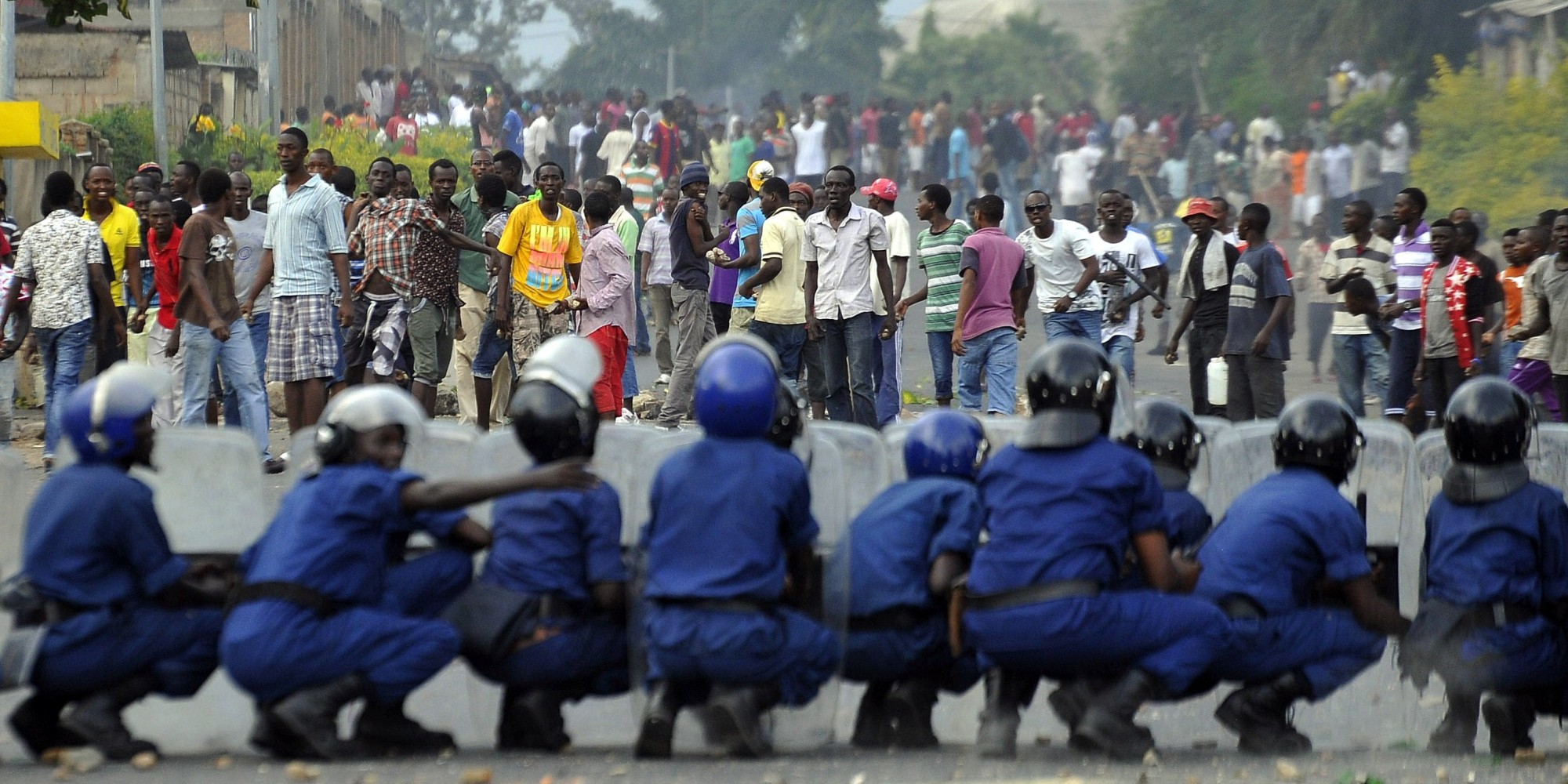 When it comes to the African continent extempers are used to talking about topics such as South Africa’s economy, the continent’s amazing economic potential in the twenty-first century, Chinese interests in the region, Robert Mugabe’s continued misrule of Zimbabwe, and conflict zones such as the Democratic Republic of Congo. What they have been less used to is talking about smaller African nations such as Burundi, but in light of significant political unrest extempers will probably be talking more about this country in the weeks and months ahead. Last April, President Pierre Nkurunziza announced that he would seek a third term. This would be normal under some democratic systems, but Burundi’s constitution, agreed to in 2006 after the end of a thirteen-year civil war, prohibits a president being elected to more than two terms. In light of Nkurunziza’s decision, opposition groups mounted several public protests and elements of the Burundian military sought to depose him in a coup in May. That attempt failed and since that time international observers have worried that Burundi is becoming a cauldron of political unrest, which could break down along ethnic lines and produce another mass genocide on the African continent reminiscent of what took place in Rwanda in 1994. Observers also worry about the radicalization of Burundian refugees and that the nation’s unrest could ignite a multi-national struggle between Burundi, Uganda, and Rwanda and their allies in East Africa. Additionally, Burundi’s unrest provides a test of the African Union’s (AU) ability to protect civilians populations in its member states and its willingness to prevent future crimes against humanity.
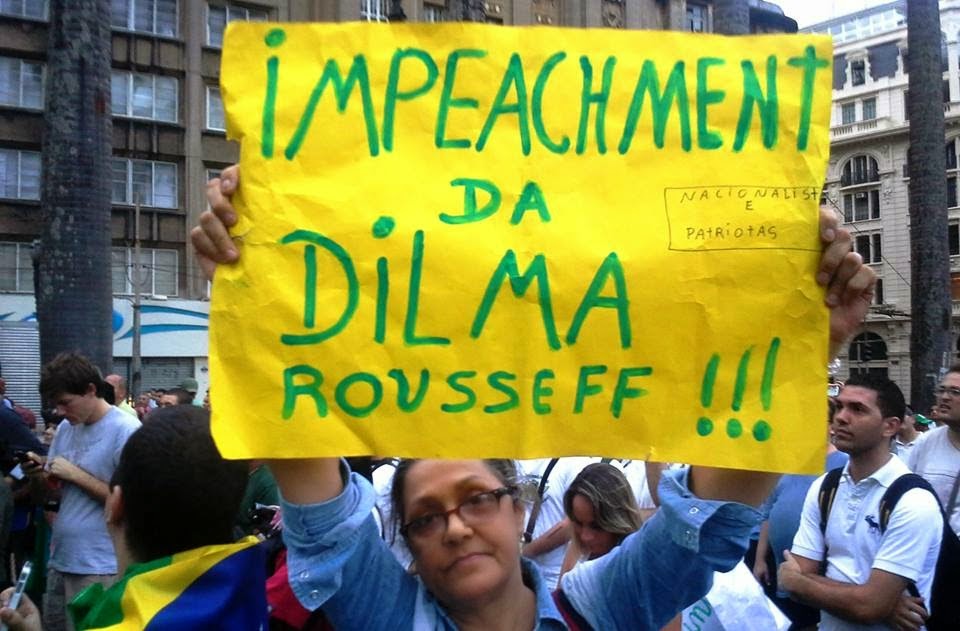 Once heralded as one of the strongest emerging economies, Brazil has seen its economic fortunes wane over the past year as a result of corruption scandals, fiscal management, and bureaucratic incompetence. The nation is in the midst of a recession – the longest downturn since the 1930s – and unemployment is nearing double digits. As if this was not bad enough, Brazil’s Congress is moving to remove President Dilma Rousseff on charges that she violated Brazil’s fiscal management laws by manipulating government finances to aid her re-election campaign last year. Congress may also move to look into whether Rousseff played any part in a scandal at the state-owned oil company Petrobras, as she was Brazil’s energy minister in former President Luiz Ignacio Lula da Silva’s government. While some investors have welcomed the move to impeach Rousseff – viewing her as an obstacle to sound economic management – other analysts worry that the impeachment controversy will be an unwelcome distraction as Brazil attempts to correct its present economic trajectory. Rousseff’s defenders argue that her prosecution is politically motivated and that Speaker Eduardo Cunha only initiated the proceedings after Rousseff’s Worker’s Party (PT) moved to oust him on charges of bribery and money-laundering.
 An incident that many commentators had been fearing in Syria took place last week when Turkish forces shot down a Russian aircraft that allegedly violated Turkish airspace. The Russian plane was reportedly flying a mission to bomb rebel positions near the Turkish border, something that Russia has made a common occurrence since deciding several months ago to bolster its support for Syrian President Bashar al-Assad. The Turkish government claimed that it warned the Russian aircraft before shooting it down, but Russia denies these claims. Russian President Vladimir Putin has demanded an apology and has taken economic countermeasures against Turkey in response to the incident. Considering the fact that France is trying to get both nations to take part in an international coalition to fight the Islamic State, the Russian-Turkish incident illustrates how assembling such a coalition will prove difficult. After all, both nations support opposite sides in the Syrian Civil War. Also, the incident sparks questions about what the Western world should do if a member of the North Atlantic Treaty Organization (NATO) finds itself in a military spat with Russia.
 Starting next Monday, more than one hundred heads of state, climate activists, international officials, and scientists will convene in Paris for negotiations on a new global climate accord that can replace the 1997 Kyoto Protocol. The conference, also referred to as COP21, will aim to install oversight of carbon emission reductions by the developed (and possibly developing world) and create a framework to aid developing nations in climate mitigation efforts. Those following environmental policy are hopeful that this conference, which has been promoted for two years, will not collapse like the Copenhagen talks did in 2009. However, limitations facing U.S. President Barack Obama, who once dreamed of a farther reaching and legally binding climate accord, may constrain the talks since the Republican Party is likely to reject any agreement that obligates the United States to reduce its carbon emissions. According to climate activists, the failure of the Paris talks would set the world on a dangerous path since the world is set to have its hottest year on record this year. According to these activists the time to act on climate change has finally arrived.