


[fblike]
 Since 1962, Myanmar has been dominated by a military junta. This junta isolated Myanmar from the rest of the world and abused the rights of its citizens, notably those of ethnic and religious minorities. In 1990, the junta flirted with holding national elections, but after the opposition National League for Democracy (NLD) won it the junta annulled the result and went about governing as if there was no election at all. In 2011, Myanmar’s generals finally began the process of modernizing their country, making strides toward opening the nation’s economy to foreign investment, trying to reach a ceasefire with ethnic militias, and transitioning to a quasi-democratic system that allows Myanmar’s citizens to elect 75% of the national legislature, which in turn elects the nation’s president. Last week’s elections were the first in more than five decades and once again, the NLD achieved a significant victory behind its Nobel Prize-winning leader Aung San Suu Kyi. Unlike 1990, the military and its political allies publicly announced that it would respect the result, thereby paving the way for Myanmar to return to civilian rule. However, winning an election and governing a country are separate tasks, and there are concerns that Suu Kyi may find it difficult to maintain her popularity and keep her diverse coalition of supporters together.
This topic brief will provide some important information about Myanmar’s elections, highlight how the elections do not mean that Myanmar has embraced universal democracy, and then discuss the challenges that Suu Kyi will face in a governing role next year.
Readers are also encouraged to use the links below and in the related R&D to bolster their files about this topic.


 Last Monday, Canadian voters delivered a stunning victory to the Liberal Party, a result deemed unthinkable several weeks ago. Prime Minister Stephen Harper’s Conservative Party lost its governing majority, losing sixty seats. Meanwhile, the Liberals gained an amazing 148 seats due to the impressive campaigning of its young leader Justin Trudeau, the oldest son of former Canadian Prime Minister Pierre Trudeau. Observers noted that the Liberal victory was due to Canada’s faltering economy as well as perceptions that Harper’s government was inconsiderate toward the plight of Syrian refugees and neglectful of Canada’s proper place in global affairs. A Trudeau-led government has promised to change Canada’s fiscal policy and reform the nation’s drug laws. The Liberals are also poised to alter Canada’s foreign policy, especially with respect to environmental and security issues. What is certain is that the Liberals will have to contend with a new Conservative Party, as Harper announced his resignation as party leader following the announcement of the election results.
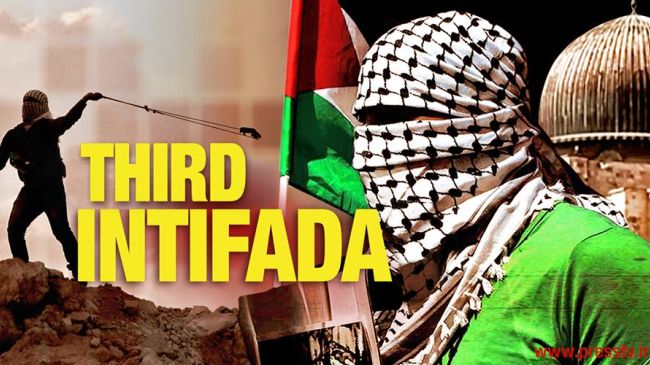 October has been a bloody month in East Jerusalem. Palestinian youth, responding to rumors that Israel is planning to take over the Temple Mount, revered as a holy site for Jews and Muslims, are clashing with Israeli security personnel and launching random, “lone wolf” attacks on Israeli civilians. In response, the Israeli government has imposed movement controls and other preventative measures, but critics contend that this will serve to exacerbate tensions rather than produce a lasting solution. Some experts contend that Palestinians are engaging in a third intifada, or uprising, and this would be the second time in two years that Palestinians are reacting violently against the Israeli government. Frustrated at their political leadership, Israeli settlement expansion, and the lack of progress toward a two-state solution, it is believed that some Palestinians are responding through violence to bring greater international attention to their plight.
 /cdn0.vox-cdn.com/uploads/chorus_image/image/47259524/GettyImages-489129346.0.0.jpg) Last week, Russian aircraft dropped bombs on Syrian rebel positions, inaugurating an escalation of Russia’s participation in Syria’s four-year civil war. Russian President Vladimir Putin has calculated that it is in Russia’s geopolitical interest to preserve the regime of Syrian President Bashar al-Assad, and Russia’s bombing runs mark a potential turning point of the conflict. Russia’s intervention could improve Assad’s position and force Western nations backing the Syrian rebels to temper their opposition to Assad’s role in a political transition. In addition, Russia’s intervention is cloaked within the bounds of an ongoing war against the Islamic State, also known as the Islamic State of Iraq and Syria (ISIS), reflecting how the Syrian Civil War has transformed from an attempt to overthrow Assad to a multi-faceted war where neither side looks good. Although the West insists that Russia will fail in its intervention, extempers should be prepared to discuss this change in the Syrian Civil War at tournaments throughout the fall as it could have implications for the ongoing fight against ISIS, the ability of Syrian rebels to displace Assad, and Russia’s position in the Middle East vis-à-vis the United States.
Last week, Russian aircraft dropped bombs on Syrian rebel positions, inaugurating an escalation of Russia’s participation in Syria’s four-year civil war. Russian President Vladimir Putin has calculated that it is in Russia’s geopolitical interest to preserve the regime of Syrian President Bashar al-Assad, and Russia’s bombing runs mark a potential turning point of the conflict. Russia’s intervention could improve Assad’s position and force Western nations backing the Syrian rebels to temper their opposition to Assad’s role in a political transition. In addition, Russia’s intervention is cloaked within the bounds of an ongoing war against the Islamic State, also known as the Islamic State of Iraq and Syria (ISIS), reflecting how the Syrian Civil War has transformed from an attempt to overthrow Assad to a multi-faceted war where neither side looks good. Although the West insists that Russia will fail in its intervention, extempers should be prepared to discuss this change in the Syrian Civil War at tournaments throughout the fall as it could have implications for the ongoing fight against ISIS, the ability of Syrian rebels to displace Assad, and Russia’s position in the Middle East vis-à-vis the United States. Ever since 2006, Nepal’s political parties have attempted to reach an agreement on a new national constitution. Divided over the role of religion in government, whether the nation’s 239-year-old monarchy should be restored, political boundaries, and the rights of ethnic minorities, the nation saw little movement on a lasting constitutional draft. However, a 7.8-magnitude earthquake in April literally shook the country’s major parties out of their prolonged gridlock. On Sunday, supporters of a new constitution gathered in the capital of Kathmandu to celebrate, but reception across the country was mixed. Ethnic minorities in Nepal allege that the constitution denies them adequate representation and women’s rights activists allege that the document rolls back some of the protections women enjoyed in previous governments. Analysts agree that Nepal’s new constitution may give its federal authorities the ability to finally govern the country and fix the problems that ail one of the world’s poorest nations. Nevertheless, if federal officials are not able to acquire adequate buy-in from the nation’s various ethnic groups, the chances of achieving lasting change are minimal.