


[fblike]
 Last week saw Nigerian voters head to the polls to decide whether President Goodluck Jonathan deserved another term in office. Jonathan, who took office in 2010 following the death of President Umaru Yar’Adua, was reeling from accusations of economic mismanagement and an inability to squelch the Boko Haram insurgency in the Nigerian northeast. Observers predicted a tense poll that could result in violence. After all, the 2011 election that Jonathan won over his challenger in this year’s race, Muhammadu Buhari, ended in riots that killed 1,000 people. However, Nigeria defied these dour predictions and more than forty million voters turned out to give Buhari a sizable margin of victory. The election marked the first time in Nigerian history that an incumbent president was defeated and optimists hope that the country, the most populous in Africa, can become a model for others on the continent. To do that, though, Buhari will have to find a way to permanently squelch Boko Haram and fix corruption issues that have plagued Nigeria for much of its post-colonial history.
This topic brief will provide an overview of the major issues that emerged during the Nigerian presidential election, discuss the reasons Buhari won, and then assess his prospects of making Nigeria a more prosperous nation.
Readers are also encouraged to use the links below and in the related R&D to bolster their files about this topic.

 In the nineteenth century Western policymakers became enamored with the idea of establishing a canal across Central America. While extempers are aware of today’s Panama Canal, which was constructed by United States between 1904 and 1914, Nicaragua was actually the first choice for a Central American canal project that would link the Caribbean and the Pacific Ocean, thereby reducing shipping times and costs. When the United States chose to build a canal through Panama it abandoned the idea of a Nicaraguan canal entirely, but the project has been revived by the Nicaraguan government and Chinese telecommunications tycoon Wang Jing. Two years ago, the Nicaraguan National Assembly granted a canal concession to Mr. Wang’s Hong Kong Canal Development Group (HKND), who will operate the canal for one hundred years, with the Nicaraguan government achieving a majority stake in the canal after fifty years. The project will cost an estimated $50 billion and is supposed to be completed within the next five years. However, opposition is growing from indigenous communities, environmental activists, and Nicaraguan President Daniel Ortega’s political opponents. There are also questions about whether the canal project is feasible and some engineers wonder whether the Grand Canal will eventually become a “grand mistake.”
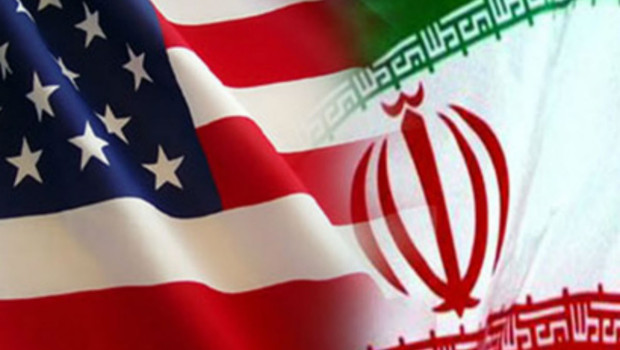 When he was elected in 2008, President Barack Obama went to great lengths to convince voters and the rest of the world that he would not continue many of the foreign policies of George W. Bush. Bush’s presidency is most remembered for the war in Iraq, a campaign that cost thousands of American lives and destabilized the Middle East. However, while the war in Iraq dominated the headlines, the prospects of a nuclear Iran also loomed over the region. In 2002, Iranian dissidents revealed that the Islamic Republic was pursuing a covert nuclear program. Since that time, the United States and its European partners, as well as China, have worked to contain the country’s nuclear ambitions, imposing sanctions to force the Iranian government to the negotiating table. In 2013, Iran agreed to an interim accord that saw it agree to restrictions on its nuclear program in return for some sanction relief. The United States hopes to have an agreement with Iran by June, thereby averting military action and possibly beginning the restoration of diplomatic relations between the two countries.
 For the last fifty years the Colombian government has been fighting the Revolutionary Armed Forces of Colombia (FARC), a Marxist outfit. The conflict has claimed 220,000 lives, displaced an estimated five million people, and harmed Colombia’s international image. Under former President Alvaro Uribe, the Colombian government launched an aggressive campaign against the FARC, which at one time controlled a vast amount of territory in the northern and eastern parts of the country. Uribe’s tactics, some of which were criticized by the Western world, succeeded in weakening the FARC’s leadership, but did not force the group to the negotiating table. President Juan Manuel Santos, who served as Uribe’s Minister of Defense, has taken a more conciliatory line toward the FARC, entering into peace negotiations with the group in November 2012. Those negotiations have borne some fruit, with the FARC declaring a unilateral ceasefire in December and both sides making progress on issues such as land reform and the FARC’s participation in politics. Santos has said that he wants a peace agreement by the end of the year, but issues such as disarming the FARC, compensating victims of the violence, dealing with the human rights abuses that took place during the conflict, and political resistance by right-wing politicians may scuttle a peace deal.
 The assassination of Russian political activist Boris Nemtsov in Moscow on February 27 shocked elements of the Russian dissident community. Nemtsov, a former deputy prime minister in the late 1990s, had been active in protesting Russia’s involvement in the Ukrainian civil war, and he was a vocal critic of the authoritarian tactics of Russian President Vladimir Putin. Some of his supporters allege that Putin was to blame for the assassination. They contend that Putin may not have ordered the killing, but his nationalistic rhetoric that has labeled dissident Russians as “traitors” and “fascists,” created the atmosphere that led to Nemtsov’s death. The Russian government argues that Putin is not responsible for the crime, saying that Nemtsov’s fellow opposition leaders, radical Islamists, or a scorned lover in Nemtsov’s past – or that of his young Ukrainian girlfriend Anna Durytska – were to blame. American and European officials condemned Nemtsov’s killing, arguing that it shows that Russia is continuing to veer away from democratic processes and growing increasingly intolerant of dissenting views as its economic situation worsens.
 Last year, American officials, including President Barack Obama, cited Yemen as an example of a nation that was successfully fighting terrorism. However, 2015 has not been kind to the Arab world’s poorest country. Last month, Shi’ite Houthi rebels kidnapped the Yemeni President’s chief of staff and seized the presidential palace. This led to the resignation of President Abdu Rabbu Mansour Hadi, who has now been placed under house arrest. The nation’s parliament has also been dissolved and the United Nations warns of that a civil war could be looming because the Houthis are a minority that cannot command allegiance from other areas of the country. Anti-terrorism experts warn that the country’s Sunni majority may swear allegiance to Al-Qaeda in the Arabian Peninsula (AQAP) in an attempt to overthrow the Houthis. This could complicate American efforts to suppress AQAP, which has targeted Western airliners in recent years and trained one of the attackers of