Category: International Extemp Page 39 of 59

HotTopics: International Extemp Questions for the Week of September 30th-October 6th, 2013

[fblike]

HOTtopics1. Should the Indian government invest in ethanol?

2. How can the British Labour Party ensure that it wins the 2015 British parliamentary elections?
3. What steps do African states need to take to reduce poaching?
4. Will the shift of several Syrian rebel factions towards favoring an Islamic state hurt their ability to secure Western aid?
5. Is al-Qaeda making a comeback?
6. What will be the composition of the next German government?
7. Why are Sino-Taiwanese relations thawing?
8. What must Pakistan do to revive its stalled peace process with India?
9. Is Italy headed for a new round of parliamentary elections?
10. Should Greece ban Golden Dawn?

HotTopics: International Extemp Questions for the Week of September 23rd-29th, 2013

[fblike]

HOTtopics1. Was it in Brazil’s best interest to have Dilma Rousseff cancel her state visit to the United States?
2. Is the ICC biased against African states?
3. Has France vanquished jihadists in Mali?
4. Is Great Britain’s “special relationship” with the United States slipping?
5. Was Mexico ill-prepared for hurricanes Ingrid and Manuel?
6. Will Pope Francis’s liberal views on homosexuality create a schism in the Catholic Church?
7. Has the world resigned itself to a nuclear Iran?
8. Would devolution ease ethnic tensions in Sri Lanka?
9. Is Jamaica winning its battle against drugs and organized crime?
10. How should the Kenyan government respond to the recent Nairobi shopping mall shooting?

2013 Australian Elections

[fblike]

On September 7th, Australian voters went to the polls and returned the Coalition, which is an alliance of the Australian Liberal Party and the Australian National Part, to power for the first time since 2007.  The Australian Labor Party suffered its worst electoral defeat in a century despite presiding over an economic boom that has enabled Australia to escape a severe global economic recession and the effect of financial crises in the United States and Europe.  The prime minister-elect, Tony Abbott of the Coalition, was at one time deemed too radical and unelectable, but managed to convince Australians that carbon taxes and refugee issues needed swift attention to preserve Australia’s place as one of the strongest economies in the world and one of the powers in Southeast Asian affairs.  Australia is often the “red headed stepchild” of extemporaneous speaking in the sense that it is often ignored by question writers since it does not neatly fit into geographic topic areas.  Nevertheless, due to the country’s strategic alliance with the United States and its economic ties to China, it is an important country to know when assessing Asia-Pacific affairs.

This topic brief will provide some background information on the recent parliamentary elections, discuss the results of the election, and then analyze how the new Coalition government will deal with the major issues that affect Australia, both foreign and domestic.

Readers are also encouraged to use the links below and in the related R&D to bolster their files about this topic.

HotTopics: International Extemp Questions for the Week of September 16th-22nd, 2013

[fblike]

HOTtopics1. Will Syria live up to the terms of the U.S.-Russian agreement concerning its chemical weapons?
2. What should the new Australian government do to reduce its record number of asylum seekers?
3. How can the Chinese-Japanese dispute over Senkaku be settled in a peaceful manner?
4. Should India impose mandatory death sentences on those convicted of rape?
5. Africa’s baby boom: a humanitarian disaster in the making or the source of future economic growth?
6. How can the Filipino government destroy the Moro National Liberation Front?
7. Should China be alarmed at the election of right-wing governments in East and Southeas Asia over the last year?
8. Will the newly elected Norwegian government make significant changes to the country’s welfare state?
9. Who stands to lose the most in Syria?
10. How can Mexico tame its high obesity rate?

Iraq Violence (2013)

[fblike]

Extempers are probably filing a great deal of articles at the moment about the ongoing conflict in Syria.  The United States is preparing for a possible intervention there, but it is important to go back to a conflict that also involved some of the current issues regarding Syria:  a country that is under the rule of a tyrant, questions of weapons of mass destruction use, and uncertainty about who will fill the power vacuum if that tyrant is eliminated.  The invasion of Iraq in March 2003 was supposed to inaugurate a process of nation building in the Middle East, whereby Iraq would be a beacon of democracy for other Middle Eastern nations.  Ten years later and two years after the withdrawal of American troops, Iraq is witnessing an increase in sectarian violence, at its highest levels since 2008 and there are fears that if Iraq descends into anarchy and violence that the sacrifices of American and coalition personnel made in the 2003 invasion and occupation were for naught.  The U.S. media has largely ignored Iraq over the past year, focusing most of its attention on Syria and other uprisings in the Arab world.  However, this neglect is unwarranted, as Iraq could have significant implications for American foreign policy in the region.
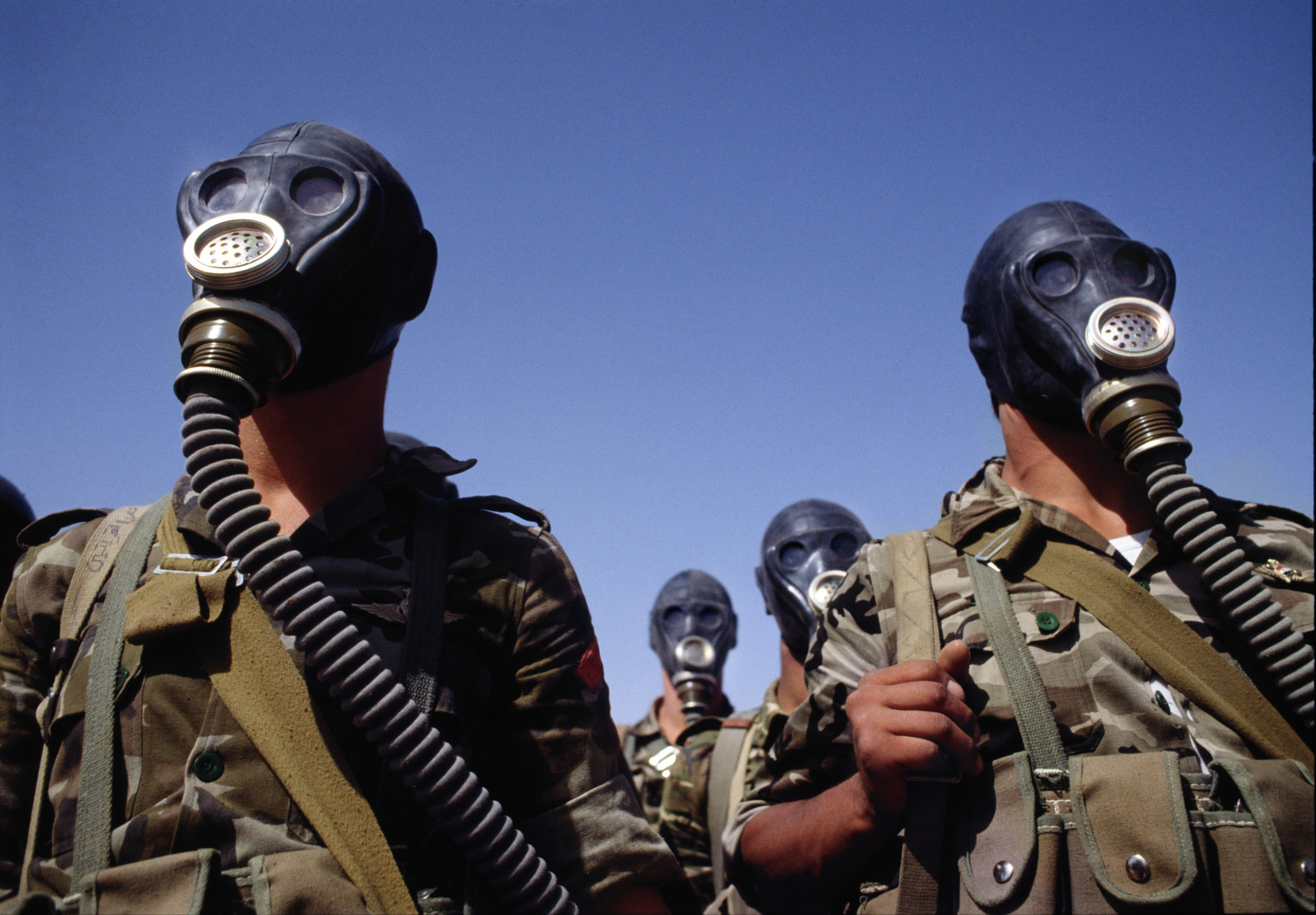

This brief will summarize some facts about the rising tide of sectarian violence in Iraq, the causes of that violence, and potential solutions for ending it and putting Iraq on the path towards domestic tranquility and economic prosperity.

Readers are also encouraged to use the links below and in the related R&D to bolster their files about this topic.

HotTopics: International Extemp Questions for the Week of September 9th-15th, 2013

[fblike]

HOTtopics1. Will Kenya’s decision to leave the ICC cause other African nations to follow suit?
2. How can the Iraqi government reduce growing levels of sectarian violence?
3. Who is to blame for the Labor Party’s defeat in the recent Australian parliamentary elections?
4. Should the UN eliminate Security Council veto powers?
5. How would a U.S.-led strike on Syria affect Israeli security?
6. Is Great Britain still a world power?
7. What steps does the Spanish government need to take to bolster its economy?
8. Are Iranian threats to the United States over Syria counterproductive?
9. Was the recent G20 summit a failure?
10. Can India afford to make food a legal right?

HotTopics: International Extemp Questions for the Week of September 2nd-8th, 2013

[fblike]

HOTtopics1. Has China’s government investment-heavy growth model run its course?
2. What steps should Nouri al-Maliki take to quell rising sectarian violence in Iraq?
3. Has the Syrian crisis allowed the UN to improve its international credibility?
4. Will recent teacher protests force President Nieto to curtail some of his proposals for domestic reform?
5. After losing a parliamentary debate on Syria, should David Cameron resign?
6. Will a new round of Colombina-FARC negotiations bear fruit?
7. Has the human rights situation in Sri Lanka deteriorated since the end of the country’s civil war in 2009?
8. If Japan’s economy gets back on track, how will that change the geopolitical situation in East Asia?
9. Should “Third World” countries have a stronger voice in international financial institutions like the IMF and the World Bank?
10. Would closer cooperation between the Pakistani and Afghan governments create a peaceful environment in Afghanistan?

Chemical Weapons Use in the Syrian Civil War

[fblike]

[Readers should not that this brief was written on Monday afternoon, so facts on the ground may have changed by the time this brief is released on Tuesday morning]

Since March 2011, Syria has been plagued by a civil war as a result of the Arab spring.  The Syrian government of President Bashar al-Assad is clashing with diverse opposition groups for control of the country.  During two and a half years of hostilities, more than 100,000 people have been killed and it is estimated that two million people have fled the country, while up to twenty-five percent of the country’s population of twenty-three million are displaced as a result of the violence.  Last Wednesday, Syrian opposition forces claim that the Syrian government launched a chemical attack in the Damascus suburb of Johar, where government forces were engaging rebel groups.  Estimates for the number killed in this attack range from a little over one hundred to 1,300.  The Syrian government denies responsibility for the attack and claims that it is a “false flag” operation.  More than a year ago, President Barack Obama stated that the use of chemical weapons by Syria would constitute a “red line” that would prompt a firm international response, but the question in Washington is what type of response should be used if it is found that the Syrian government was responsible for the Johar attack.

This brief will break down the Johar attack and alleged chemical use in the Syrian civil war, international concern with the use of chemical weapons, and courses of action that the United States may use in order to respond to the Johar attack.

Readers are also encouraged to use the links below and in the related R&D to bolster their files about this topic.

HotTopics: International Extemp Questions for the Week of August 26th-September 1st, 2013

[fblike]

HOTtopics1. What should the Russian government do in light of new reports of chemical weapons usage in Syria?
2. Will the release of Hosni Mubarak make Egypt’s interim government extremely unpopular?
3. What can missile defense planners learn from Israel’s Iron Dome?
4. How can the UN’s MONUSCO mission in the Democratic Republic of the Congo improve its effectiveness?
5. Will recent revelations about radiation at the Fukushima nuclear plant doom attempts at reviving nuclear power in Japan?
6. Do European governments need to take stronger actions against neo-Nazi movements?
7. Why is economic growth in India slowing down?
8. Should Ukraine sign a customs agreement with the European Union or Russia?
9. How should the Brazilian government deal with rising illegal immigration?
10. Would consolidation improve European banking?

Egyptian Unrest & U.S. Aid

[fblike]

Since 1979, when Egypt was a signatory to the Camp David Accords with Israel, whereby Egypt normalized its relations with Israel in exchange for the Sinai Peninsula, the United States has maintained strong military and diplomatic ties with the Egypt.  Today, the United States government provides an estimated $1.5 billion in aid to the Egyptian military.  American foreign policy views Egypt as a bulwark against unrest in the Middle East and a constructive player in the Israeli-Palestinian dispute.  However, that foreign policy view left the United States backing Egyptian strongmen like former President Hosni Mubarak, who ruled the country under a state of emergency for nearly thirty years.  The Arab Spring in Egypt in 2011 ousted Mubarak and brought to power the Muslim Brotherhood, an Islamist political organization and religious social organization, which had been declared an illegal organization after it was accused of trying to assassinate Egyptian Prime Minister Gamal Abdel Nasser in 1954.  After being unable to stabilize the country politically or economically, protests against the Brotherhood’s rule were launched in June, which culminated in a military coup on July 3rd that installed a provisional government headed by Supreme Constitutional Court Chief Justice Adly Mansour.  In light of the military government’s recent crackdown on sit-ins launched by the Brotherhood six weeks ago to pressure the provisional government to step down, which caused the deaths of at least 600 people, the United States and the Egyptian governments are in a tricky situation.  Should the U.S. end its military aid to Egypt and risk alienating its governing authorities?  How would that affect the geopolitical situation in the Middle East?  Also, what is the effect of this unrest on Egyptian society and is there a way for the Egyptian provisional government to put the country on the path towards peace, prosperity, and political reconciliation?

This brief will summarize some of the major political and economic issues confronting Egypt, American foreign policy towards the Egyptian government, and what the future may hold for U.S.-Egyptian relations.

Readers are also encouraged to use the links below and in the related R&D to bolster their files about this topic.

HotTopics: International Extemp Questions for the Week of August 19th-25th, 2013

[fblike]

HOTtopics1. How should the Nigerian government deal with Boko Haram?
2. Will Cristina Fernández de Kirchner succeed in amending the Argentinian constitution so that she can run for a third term?
3. What reforms are needed to the Mexican judicial system?
4. Should India avoid an upcoming meeting with Pakistan due to the recent violence in Kashmir?
5. Is the ETA still a threat to the Spanish government?
6. Should Poland be given a greater say in NATO?
7. Can Uruguay’s legislation of marijuana become an effective template for other countries?
8. What changes should Hassan Rohani make to Iran’s nuclear program?
9. Why is economic growth slowing in emerging markets?
10. What role should the European Union play in the Gibraltar dispute?

HotTopics: International Extemp Questions for the Week of August 12th-18th, 2013

[fblike]

HOTtopics1. What should Russia do with Edward Snowden after his one year asylum expires?
2. Are European governments too lax in their protection of the Roma?
3. What grade should the Turkish government receive for its human rights record?
4. Will violence in Syria lead to the rise of the Muslim Brotherhood?
5. Is it wise of the Egyptian military to prosecute Mohamed Morsi?
6. Can Marina Berlusconi be an effective leader of the Italian right?
7. Should Great Britain give Gibraltar to Spain?
8. Is time running out for the Israelis to make a suitable peace with the Palestinians?
9. How should OPEC respond to political unrest in the Middle East?
10. Has Venezeula’s international profile taken a serious hit since the death of Hugo Chavez?

HotTopics: International Extemp Questions for the Week of August 5th-11th, 2013

[fblike]

HOTtopics1. Does Mahmoud Ahmadinejad leave office with a positive legacy?
2. Why is South Africa supporting Robert Mugabe?
3. Is an Egyptian government led by its military better for the West than a government led by the Muslim Brotherhood?
4. Will a Kevin Rudd-led Labor Party win Australia’s September elections?
5. What impact will rising Euroskepticism have on the Dutch government?
6. Has Silvio Berlusconi’s political career finally come to an end?
7. Is nuclear power the key to China’s economic future?
8. How can Ollanta Humala recover his popularity?
9. Are Afghanistan’s security forces strong enough to contain the Taliban?
10. Can the upcoming Winter Olympics create more tolerance for homosexuals in Russian society?

HotTopics: International Extemp Questions for the Week of July 29th-August 4th, 2013

[fblike]

HOTtopics1. Is it in Pakistan’s best interest to improve ties with Afghanistan?
2. What steps does the Libyan government need to take to restore stability?
3. What should be France’s Mali exit strategy?
4. Who will win the July 31st Zimbabwean elections?
5. What should the Italian government do about racism?
6. Is al Qaeda making a comeback in Iraq?
7. Why are Donald Tusk’s political fortunes lagging in Poland?
8. If the EU had a trade war with China, who would come out on top?
9. How should the international community police money-transfer agencies to insure that they are not funding terrorism?
10. Would the construction of an interoceanic canal solve Nicaragua’s poverty problem?

[twitter]

HotTopics: International Extemp Questions for the Week of July 22nd-28th, 2013

HOTtopics[fblike]

1. What should Shinzo Abe do with his new electoral mandate?
2. If the Israelis are willing to give up settlement construction, what should the Palestinians give up in return?
3. Is Assad winning the Syrian civil war?
4. Can independent television weaken ZANU-PF’s hold on Zimbabwean politics?
5. Is it in Italy’s best interest to jail Robert Seldon Lady?
6. Should India let go of Kashmir?
7. Is separatism a realistic solution to Belgium’s lingustic divide?
8. Has the euro zone escaped the worst of its fiscal crises?
9. How long with Enrico Letta’s government last?
10. Are liberal economic policies reviving its moribund economy?

[twitter]

Page 39 of 59

Powered by WordPress & Theme by Anders Norén