

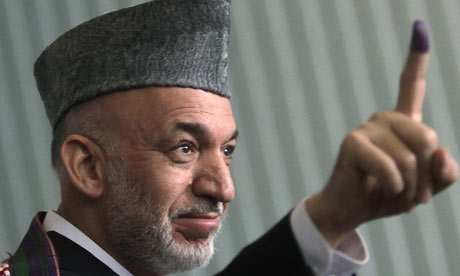
 Two weeks ago, the nation of Afghanistan held its second presidential election since the U.S. invasion of the country in 2001. President Hamid Karzai was looking for another term in office against 39 other candidates, the most notable of which was Dr. Abdullah Abdullah, a ethnic Tajik who was a former foreign minister in the Afghan government. The election was seen as a measuring stick of how stable, or unstable, Afghanistan has become over the last several years.
By most military estimates, Afghanistan is in danger of being lost. Years of ignoring the country’s internal development due to the war in Iraq have allowed warlords to continue to hold control of parts of the country and the Taliban to spread out. Areas in northern and western Afghanistan which had before been pacified by American troops and NATO forces are now under more influence from the Taliban. Afghan experts are fearing that a Taliban insurgency could become a wider rebellion against the Afghan government.
While the Afghan election result is still uncertain and it is possible that there will be a runoff in October, extempers would be wise to consider the possibilities of the result and the impact the result will have on U.S. Afghan policy, the war in Afghanistan, and the country’s internal political structure. As such, this brief will detail some crucial events in the run-up to the Afghan election, the behavior of the vote, and why it matters for Afghanistan’s future.
 Extempers who are juniors or seniors this year might remember the protests that threatened the ruling government of Myanmar, a country also referred to as Burma by much of the international community, in the fall of 2007. These protests, led by monks and political dissidents of Myanmar’s military junta, were in response to the junta removing fuel subsidies but eventually acquired a more democratic flavor. However, this so-called Saffron Revolution was quelled by the beating, imprisonment, and killing of its participants and thus, Myanmar’s second attempt at acquiring a democratic government since 1962 failed.
 Without question the biggest domestic issue facing the United States in healthcare. After years of extempers discussing foreign policy issues such as the war in Iraq, the war in Afghanistan, and the United States role in the international system, the focus has shifted back to domestic issues as Americans become more concerned about the home front in light of the economic recession.
 As has been the case over the last several years, international attention was focused on North Korea last week as former U.S. president Bill Clinton went on a “humanitarian” mission to seek the release of two American journalists detained there. Unlike other attempts at international reconciliation with North Korea, Clinton’s visit was a large success, winning the release of the journalists and possibly opening a new arena of dialogue between the U.S. and North Korea over its human rights record and nuclear program.
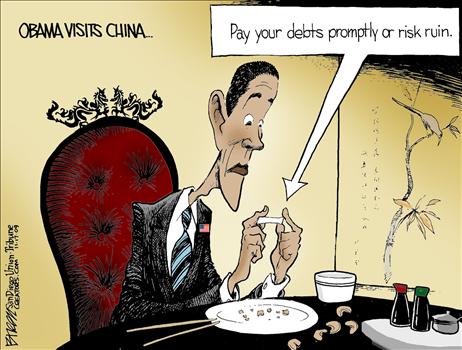 During the “off season” after NFL Nationals, the issue of the budget deficit has come to be a major one in American politics. It has the potential to shape the outcome of the midterm elections in 2010 and is playing a role in President Barack Obama’s declining popularity ratings. As extempers get ready for the 2009-2010 season, which starts in less than six weeks with the Wake Forest National Early Bird, they will face questions about an array of economic issues such as unemployment, the effectiveness of the stimulus package, and the level of international trade as well as the controversial issue of healthcare reform. All of these issues have something to do with the budget of the United States government and by proxy the deficit the U.S. government currently finds itself facing.
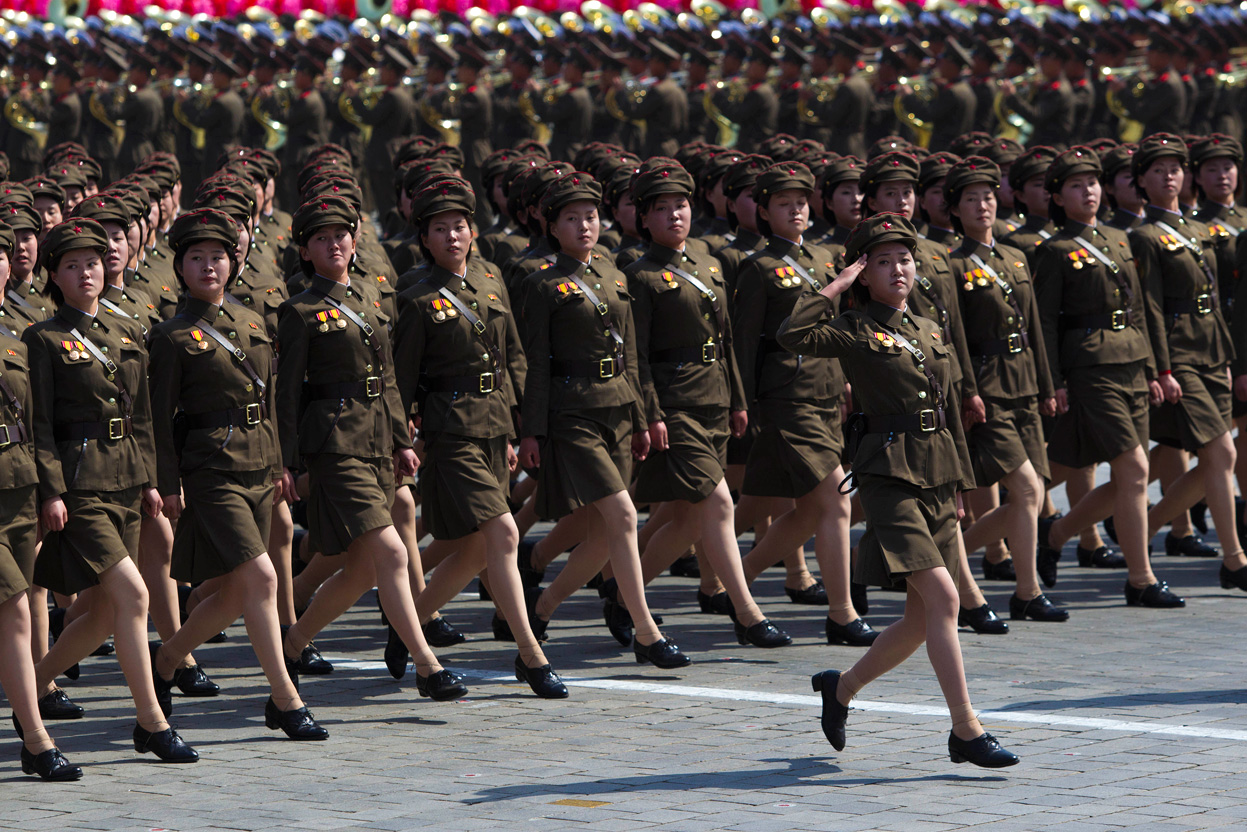 Early last month, North Korea angered the international community over its launch of a long range missile (Taepodong-2). This launch went against UN Security Council resolutions that ban North Korea from conducting ballistic missile tests, although North Korea’s government saw it as an attempted satellite launch, arguing that it had the right to explore space. This launch was determined to be a failure, with the second and third stages of the rocket failing to separate as planned. Despite this failure, North Korea appears to have gained international attention yet again, by conducting its second nuclear test.
 Last week, extempers were given the treat of seeing President Barack Obama and former Vice-President Dick Cheney give speeches on national security. The Obama administration has continued to advocate that the Bush administration’s policies were negligent in winning international support and made hasty decisions concerning the treatment of detainees in the conflict. Not to take these allegations lying down, Cheney has fired back that Obama is trying to compromise with an enemy that will never compromise and is endangering America’s national security when he is releasing information about interrogation techniques and wanting to close Guantanamo Bay.
 Last week Social Security and Medicare trustees released a chilling report that documented the dire financial straits of the programs they oversee. According to the trustees, Social Security will start taking in less money than it sends out in 2016 and by 2037 the fund will go bust, four years earlier than anticipated. Also, Medicare’s hospital fund is already running a deficit and is now in danger of going bust by 2017.
 One international event that has brought about unified international outrage is the military offensive of the Sri Lankan government against the Liberation Tigers of Tamil Eelam (LTTE). Over the last two years, the Sri Lankan government has managed to corner the Tigers, a group that claims to be fighting for the islands Tamil minority and is labeled as a terrorist group by the United States and the European Union, into a narrow strip of land in the northern part of the country. The concluding offensive, which has the potential to end a military conflict that began in 1983, has put civilians in danger from both sides and there have been numerous calls around the world for the Sri Lankan government to enact a ceasefire with the Tigers so as to allow humanitarian assistance to best be brought to the civilians trapped in the conflict zone.
 Last Friday, Supreme Court justice David Souter announced his retirement, pending the confirmation of a successor. Souter has been a liberal vote on the court, progressively moving in that direction since arriving to the Court in 1990. He was a former New Hampshire Attorney General, New Hampshire Supreme Court justice, and First Circuit Court of Appeals justice before serving on the highest court in the United States.
 The last several years have been fortunate for the world’s medical watchers. Fearing an avian flu pandemic across the globe several years ago, these experts have only had to watch the progression of the virus in isolated parts of the Eastern Hemisphere. Also, avian flu never became a human-to-human transmission problem, reducing the urgency required or the threat of avian flu becoming a global problem. However, the recent outbreak of swine flu, if it can be aptly called that since this strain of flu borrows from swine influenza, avian influenza (albeit not its most dangerous components), and human influenza components, which has infected nearly 1500 people globally at the time of this writing, can aroused fears that this is the next global flu pandemic. This is compounded by the fact that swine flu appears to be spreading from person to person, regardless of their contact with infected animals.
 In a time of federal bailouts for corporations, aid to homeowners who are facing trouble paying their mortgages, and budget plans that call for trillion dollar deficits, a segment of the American population has had enough. Clinging to their signs and cries of showing Washington that power still rested with the people, 800 locations around the country were the site of “tea parties” last week, denouncing the policies of President Barack Obama and the Democratically-controlled Congress.
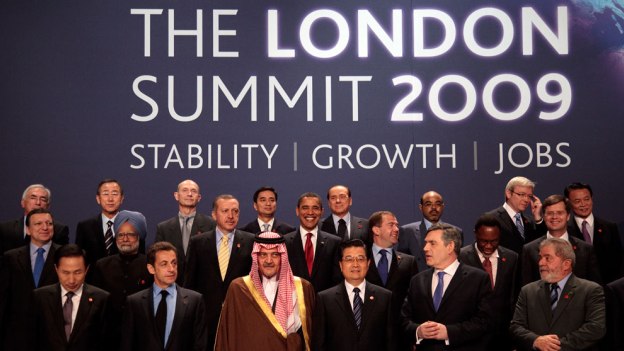 The global financial crisis is truly a global phenomenon. A crisis that centered around a lack of credit brought about by poor judgment by financial institutions has created an international recession and the World Bank estimates that global economic growth will decline by 1.7 percent this year, the first time such a decline has existed since World War II. The Organization of Economic Cooperation and Development (OECD) has also weighed in on the financial crisis and backed up the World Bank’s claims in reporting that its 30 members will experience a 4.3 percent decline in growth this year.
 by Logan Scisco