


[fblike]
[Readers should not that this brief was written on Monday afternoon, so facts on the ground may have changed by the time this brief is released on Tuesday morning]
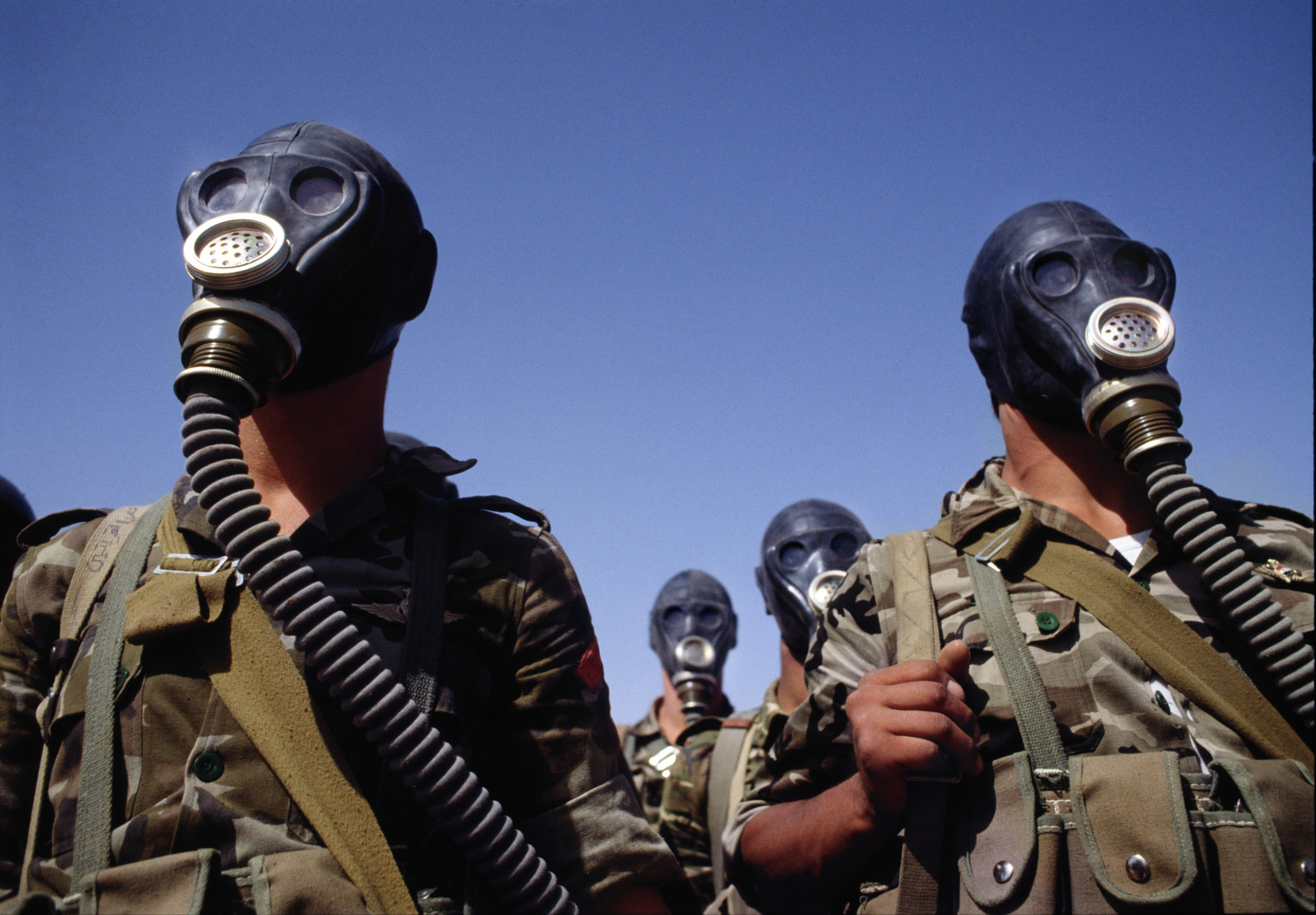
Since March 2011, Syria has been plagued by a civil war as a result of the Arab spring. The Syrian government of President Bashar al-Assad is clashing with diverse opposition groups for control of the country. During two and a half years of hostilities, more than 100,000 people have been killed and it is estimated that two million people have fled the country, while up to twenty-five percent of the country’s population of twenty-three million are displaced as a result of the violence. Last Wednesday, Syrian opposition forces claim that the Syrian government launched a chemical attack in the Damascus suburb of Johar, where government forces were engaging rebel groups. Estimates for the number killed in this attack range from a little over one hundred to 1,300. The Syrian government denies responsibility for the attack and claims that it is a “false flag” operation. More than a year ago, President Barack Obama stated that the use of chemical weapons by Syria would constitute a “red line” that would prompt a firm international response, but the question in Washington is what type of response should be used if it is found that the Syrian government was responsible for the Johar attack.
This brief will break down the Johar attack and alleged chemical use in the Syrian civil war, international concern with the use of chemical weapons, and courses of action that the United States may use in order to respond to the Johar attack.
Readers are also encouraged to use the links below and in the related R&D to bolster their files about this topic.
 Since 1979, when Egypt was a signatory to the Camp David Accords with Israel, whereby Egypt normalized its relations with Israel in exchange for the Sinai Peninsula, the United States has maintained strong military and diplomatic ties with the Egypt. Today, the United States government provides an estimated $1.5 billion in aid to the Egyptian military. American foreign policy views Egypt as a bulwark against unrest in the Middle East and a constructive player in the Israeli-Palestinian dispute. However, that foreign policy view left the United States backing Egyptian strongmen like former President Hosni Mubarak, who ruled the country under a state of emergency for nearly thirty years. The Arab Spring in Egypt in 2011 ousted Mubarak and brought to power the Muslim Brotherhood, an Islamist political organization and religious social organization, which had been declared an illegal organization after it was accused of trying to assassinate Egyptian Prime Minister Gamal Abdel Nasser in 1954. After being unable to stabilize the country politically or economically, protests against the Brotherhood’s rule were launched in June, which culminated in a military coup on July 3rd that installed a provisional government headed by Supreme Constitutional Court Chief Justice Adly Mansour. In light of the military government’s recent crackdown on sit-ins launched by the Brotherhood six weeks ago to pressure the provisional government to step down, which caused the deaths of at least 600 people, the United States and the Egyptian governments are in a tricky situation. Should the U.S. end its military aid to Egypt and risk alienating its governing authorities? How would that affect the geopolitical situation in the Middle East? Also, what is the effect of this unrest on Egyptian society and is there a way for the Egyptian provisional government to put the country on the path towards peace, prosperity, and political reconciliation?
 World’s ecosystems provide ‘services’ equal to global income
 Okinawa Issue Lingers
 Colombia votes
 Canada’s Q1 growth tops 6%
 Gay couple freed by Malawi presidential pardon return to home villages
 South Africa’s World Cup: Who Profits Most
 Russia Seeks Energy Cooperation With Ukraine
.jpg) Each day, Extemp Central will be presenting R&D’s for CFL’s nine topic areas. It is hoped that extempers can use these as a guide to beef up their files/research for the tournament.
Each day, Extemp Central will be presenting R&D’s for CFL’s nine topic areas. It is hoped that extempers can use these as a guide to beef up their files/research for the tournament.