


[fblike]
 Last week, Nigeria announced the results of the rebasing (changing the weights given to different sectors of its economy) of its Gross Domestic Product (GDP). International observers expected the rebasing, which had not taken place since 1990, to add significant value to the nation’s economy, but they did not anticipate that it would add 89% to Nigeria’s existing GDP and make it Africa’s largest economy. The rebasing suggests that the Nigerian economy is worth $510 billion versus $370 billion for South Africa, who had long held the title of Africa’s largest economy. However, although the GDP figures suggest that Nigeria is a nation on the rise, the country confronts a domestic Islamist insurrection, corruption problems, and rampant poverty. Fixing these problems will be important if Nigeria wants to become a leading power on the African continent and an influential international player.
This topic brief will discuss Nigeria’s economic issues, the security challenges that the nation faces, and what steps the Nigerian government can take to fix its problems in these two areas.
Readers are also encouraged to use the links below and in the related R&D to bolster their files about this topic.
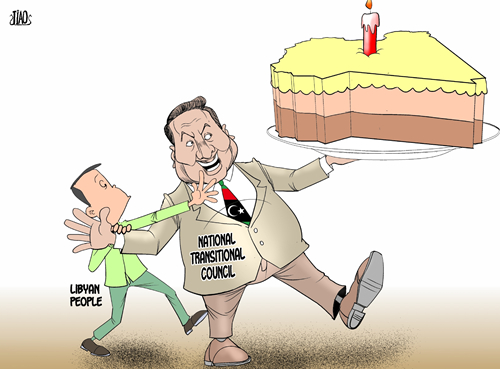 The “Arab Spring” of December 2010 created uprisings throughout the Middle East and North Africa and successfully brought down the existing governments of Tunisia, Egypt, and Libya. As extempers are aware, the Arab Spring, which has also been referred to as the “Arab Uprisings” by some Middle Eastern historians like Dr. Juan Romero of Western Kentucky University, has not produced more stability in the region and some countries that were affected are sliding back toward despotism. Egypt has a short-lived post-revolutionary government under the Muslim Brotherhood that was deposed by the Egyptian military in the fall of last year and Libya is struggling to regain its footing after deposing long time dictator Muammar Gaddafi (you will also see Gaddafi referred to in the media as “Qaddafi”). Libya is home to feuding tribal groups and militias, some of whom have seized the country’s ports and prevented oil from leaving the country. In some ways, Libya’s problems mirror those of Iraq after the United States invasion in 2003 where the central government, built around the personality of the main leader, collapsed and the interim government is finding it very difficult to piece the nation back together again. A big difference between the two is that the United States and its allies in the North Atlantic Treaty Organization (NATO) never officially put “boots on the ground” in Libya, so the interim government there has struggled to maintain order.
  Prior to the First World War in 1914, Argentina’s economy was considered one of the top ten in the world. Following the war, which disrupted the country’s economic advantages in trade, the country has experienced political upheaval, corruption, and pursued poor economic policies that have eroded what was once a beacon of wealth in Latin America. In 2002, the nation experienced the largest sovereign debt default in history and twelve years later some economists are fearing that it is heading down the same road. President Cristina Fernandez de Kirchner, who took power in 2007, has enacted populist economic reforms while attempting to consolidate her rule. However, these policies have eroded foreign investment, sparked high inflation, and are now beginning to create political unrest that threatens her hold on power. Extempers who read our brief earlier this season on Venezuela’s municipal elections will find some similarities between its economy and Argentina and this brief should be a useful tool for extempers that have to talk about the Argentinean economy or the rise and fall of populist and leftist policies in Latin America.
 On February 22nd, Florentine mayor and Democratic Party (DP) leader Matteo Renzi became the youngest Italian prime minister. Renzi, who is thirty-nine years old, has promised a series of reforms to shake up Italy’s dysfunctional political and economic culture. While never holding office on a national scale, Renzi believes that he can use his first 100 days in office to get Italy moving again and restore it to its proper place as one of the major powers on the European continent. However, old political and economic habits die hard and political observers, which include some of those in Renzi’s own party, feel that he is all flash and no substance. Considering the fact that Italy is the third largest economy in the eurozone and that its economy has not fared well over the last two decades, Renzi comes at a crucial time in Italian history. A successful administration could put Italy back on the road to economic growth and a more stable political system, but a failure could dishearten the Italian population and lead to populist leaders taking power from either the political left or the right.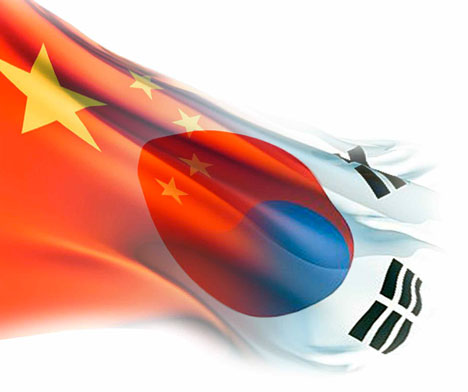
 For the last two months demonstrations have been waged against the Ukrainian government of Victor Yanukovych. Yanukovych, who was elected to the presidency in 2010, triggered the protests by turning down an association agreement with the European Union (EU). The protests have only grown larger since Yanukovych’s governing party pushed through a controversial anti-protest law that stifled nearly all forms of free speech and to date, at least six people have died in clashes between protesters and security officials. Geopolitical analysts see Ukraine as a diplomatic battleground between the West and Russia and Ukraine’s political problems often pit the EU and the United States against Russia and its president Vladimir Putin. This means that questions about Ukraine often appear in rounds about Europe and American foreign policy over the course of a season and the current unrest in Ukraine makes it very likely that you could see a question about it at your state tournament.
 On January 5th, Bangladesh held parliamentary elections that were marred by a widespread opposition party boycott and violence against supporters of Bangladesh’s governing Awami League and the country’s Hindu minority. The international community condemned the violence and has urged the Awami League to reach a political agreement with its main rival, the Bangladesh National Party (BNP) so that new elections can be held to create a legitimate government. Thus far, Prime Minister Sheikh Hasina has shown little willingness to compromise with the opposition. Bangladesh has been one of the global economic success stories since 1990 and has successfully reduced levels of poverty through international trade agreements. However, the recent political violence could ruin the country’s international image, its economic progress, and make it a center for Islamic extremism.
 Last week, on December 29th and 30th, two suicide bombings in Volgograd, a Southern Russian city formerly known as Stalingrad, killed at least thirty-four people and sent at least fifty others to the hospital. The town of Volgograd is located 400 miles from Sochi, where next month’s Winter Olympics will be held. Although no group has taken responsibility for the attacks as of the time of this brief, Russian security forces and international experts believe that the suicide attacks are listen to terrorist groups in the North Caucasus region of Russia, whose Muslim population has long sought self-government. Considering that Doku Umarov, a Chechen terrorist leader, proclaimed in July that he wanted to disrupt the Olympics, there are concerns in the international community that the Sochi Olympics would become a 2014 version of the 1972 Munich Games, which were marred by the murder of eleven Israeli athletes at the hands of Palestinian terrorists. Russian President Vladimir Putin is also facing international condemnation for his nation’s policies regarding homosexuals and the gradual erosion of democratic safeguards that were put in place after the fall of the Soviet Union in 1991. Due to these issues, it would not be surprising to encounter questions at tournaments over the next six weeks about the Sochi Olympics and whether Russia is capable of protecting the athletes and tourists attending the event and how it should respond to international criticisms of its domestic policies.
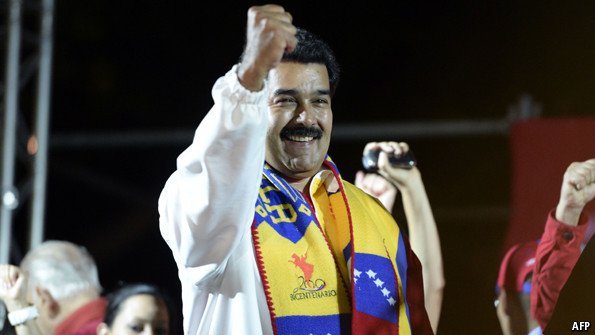 It has been a very tumultuous year in Venezuelan politics. In March Hugo Chavez, who governed the country for fourteen years and attempted to create a vibrant socialist movement in Latin America called Bolivarian Socialism, died of cancer and his successor Nicolas Maduro, a former bus driver and union activist, barely won the presidency in a disputed April election. In the midst of high crime rates and poor economic problems, Venezuela held municipal elections for 337 mayoral seats and 2,435 city council officials on December 8th. The opposition, named the Democratic Unity alliance (MUD), called for voters to reject members of Maduro’s Unified Socialist Party of Venezuela (PSUV) and turned the election into a national referendum. The election result ended up mixed, as PSUV won a higher percentage of ballots cast for its candidates, winning 49-43%, but the MUD won control of five of the country’s most populous cities, which include the capital city of Caracas. The next round of national elections are not scheduled until 2015 and the opposition are hoping to recall Maduro from office by 2016. However, the immediate result of the municipal elections may give Maduro some breathing room to consolidate his grip on power and handle Venezuela’s looming economic problems, which could impair the advancement of Bolivarian Socialism next year.
 Two weeks ago, India launched its Mangalyaan mission to Mars. The mission, which will take ten months to reach Mars, is intended to study the Martian atmosphere and conduct scientific tests to determine if any forms of life exist on the Red Planet. If India’s mission is successful, it would become the first Asian nation to launch a successful Martian mission and it would become the first nation to successfully reach Mars in its first mission attempt. Success would also increase the prominence of the Indian space program, which launched a successful lunar mission in 2008. Since China is considered the preeminent space power in Asia, having already placed a men and women in Earth’s orbit and having more powerful rockets than India, analysts are speculating that India’s Mars mission could inaugurate a space race between both powers, setting the tone for twenty-first century space exploration.
.gif/490px-New_Saudi_Arabia's_traffic_sign_(women2drive).gif) Two weeks ago, women in Saudi Arabia staged a protest against the country’s ban on female driving. The campaign that launched the protest, called Women2Drive, began in 2011 and has attempted to place pressure on the Saudi government to lift what they feel is an onerous restriction on women. Saudi Arabia is one of the world’s largest oil producers and a key American ally in the Middle East. Extempers often receive questions about Saudi Arabia concerning terrorism, the Israeli-Palestinian peace process, Iran’s nuclear ambitions, and oil issues, but the issue of women’s rights may soon factor into those rounds as well. Saudi Arabia is one of the more conservative states in the Middle East and is still run by a king, with no elected national legislature. The kingdom staved off the unrest of the 2011 Arab Spring, but the government is worried that issues like women’s rights may harm the kingdom’s international profile and lead to larger protests against it in the near future.
Two weeks ago, women in Saudi Arabia staged a protest against the country’s ban on female driving. The campaign that launched the protest, called Women2Drive, began in 2011 and has attempted to place pressure on the Saudi government to lift what they feel is an onerous restriction on women. Saudi Arabia is one of the world’s largest oil producers and a key American ally in the Middle East. Extempers often receive questions about Saudi Arabia concerning terrorism, the Israeli-Palestinian peace process, Iran’s nuclear ambitions, and oil issues, but the issue of women’s rights may soon factor into those rounds as well. Saudi Arabia is one of the more conservative states in the Middle East and is still run by a king, with no elected national legislature. The kingdom staved off the unrest of the 2011 Arab Spring, but the government is worried that issues like women’s rights may harm the kingdom’s international profile and lead to larger protests against it in the near future.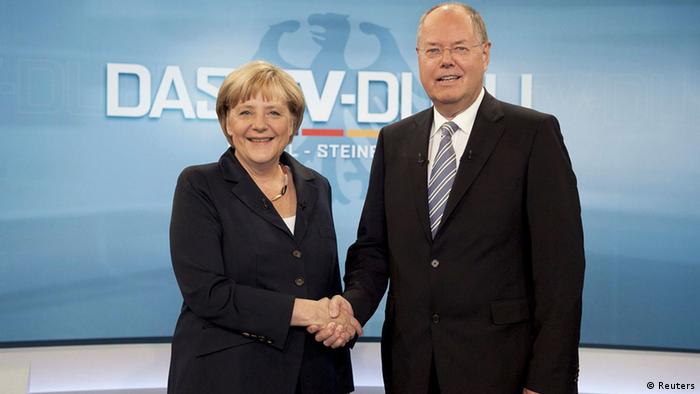 On September 22nd, German voters handed Chancellor Angela Merkel her biggest electoral triumph and put her in a position to lead her third consecutive government. Merkel’s center-right Christian Democratic Union (CDU) and its sister party, the Christian Social Union (CSU) took 41.5% of the vote. The Social Democratic Party (SPD) took second place with 25.7% of the vote and the communist leaning Left Party took 8.6% of the vote. However, the CDU/CSU only won 311 seats in the 630 seat German Bundestag, which leaves it five seats shy of a majority. The CDU/CSU’s coalition partner, the Free Democratic Party (FDP) failed to win representation in parliament for the first time since 1949, so the CDU/CSU must now enter into a coalition with the SPD or the Green Party, which took 8.4% of the vote, to govern the country. A failure to form a new coalition would inaugurate new elections. The German election was watched closely by European political observers because Germany’s economy is the largest in Europe and it guides a great deal of European Union (EU) policy. A Merkel defeat might have spelled significant changes for how the EU is handling debtor countries like Greece and further complicated the process of European integration. Her victory shows that German voters have endorsed her handling of the German economy through the euro zone crisis that began in 2010.
 Extempers are probably filing a great deal of articles at the moment about the ongoing conflict in Syria. The United States is preparing for a possible intervention there, but it is important to go back to a conflict that also involved some of the current issues regarding Syria: a country that is under the rule of a tyrant, questions of weapons of mass destruction use, and uncertainty about who will fill the power vacuum if that tyrant is eliminated. The invasion of Iraq in March 2003 was supposed to inaugurate a process of nation building in the Middle East, whereby Iraq would be a beacon of democracy for other Middle Eastern nations. Ten years later and two years after the withdrawal of American troops, Iraq is witnessing an increase in sectarian violence, at its highest levels since 2008 and there are fears that if Iraq descends into anarchy and violence that the sacrifices of American and coalition personnel made in the 2003 invasion and occupation were for naught. The U.S. media has largely ignored Iraq over the past year, focusing most of its attention on Syria and other uprisings in the Arab world. However, this neglect is unwarranted, as Iraq could have significant implications for American foreign policy in the region.