


[fblike]
 Iraq has largely stayed under the radar during the 2013-2014 extemporaneous speaking season, which is a far cry from when the country was the focal point of many rounds between 2002 and 2008. However, on the eve of this year’s National Speech and Debate Association (NSDA) National Tournament, Iraq has come back into the public eye in light of the collapse of the Iraqi Army in Mosul and Tikrit. The Islamic State of Iraq and Syria (ISIS), also known as the Islamic State of Iraq and al-Sham (ISIL), forced the Iraqi Army to flee last week and are now threatening to capture Baghdad, the Iraqi capital. The ISIS, who have been active in the Syrian civil war and aim to create a Sunni caliphate that encompasses territory from both countries, could threaten Middle East instability, lead to the partition of Iraq, and have a negative impact on global oil markets.
This topic brief will give some background on the ISIS, discuss their recent military operations in Iraq, and analyze the threat they pose to Iraq and other nations in the region, as well as how the rise of the ISIS may impact future American foreign policy toward Iraq. Extempers are encouraged to read Extemp Central’s premium topic brief on Iraqi violence, which was written in September, to supplement this brief.
Readers are also encouraged to use the links below and in the related R&D to bolster their files about this topic.
 On June 2, the Environmental Protection Agency (EPA) unveiled new regulations to limit America’s carbon dioxide (CO2) emissions. Using provisions of the Clean Air Act of 1970, which require the EPA to regulate pollutants, the EPA has laid out a series of regulations designed to reduce U.S. carbon emissions by 30% from 2005 levels by 2030. Successfully doing so will help America maintain its international commitments to reduce its carbon emissions and the Obama administration and environmental forces believe that it will encourage other nations to take action on climate change. Opponents of the EPA regulations argue that they unconstitutionally strip regulatory control of carbon emissions from Congress and warn that they will harm the nation’s economy. Since the EPA regulations will go into effect over the next four years, extempers should be prepared for questions about their implementation and effectiveness.
 Elections for the European parliament, which took place from May 22 to May 25, were deemed as a political earthquake. Parties that were anti-European Union (EU), anti-immigration, and pro-Russian won sizable vote shares across the continent, especially in Western Europe, and significantly increased their representation in the new European Parliament. In France and Great Britain, far-right political parties defeated more moderate liberal and conservative parties and illustrated that predicting future electoral outcomes in these countries will not be easy. Since the parties of the far-right have largely been ostracized in the past due to Europe’s experiences with far-right forces in the lead up to the Second World War, their recent rise has focused attention on the continent’s economic and social problems and put the future of European integration in doubt.
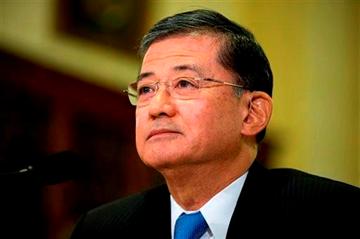 Since the war on terrorism began in 2001, questions about veterans’ issues have played a role in military and national defense rounds. The wars in Iraq and Afghanistan added thousands of injured veterans to the list of those receiving care at Veterans Affairs (VA) hospitals throughout the country. The Veterans Health Administration (VHA) current provides cares to nearly 10,000,000 American veterans across 1,700 sites. The VHA has been heralded as a healthcare success among other elements of bureaucratic dysfunction that are sometimes associated with the federal government, but a recent scandal has called into question the care that veterans are receiving. Allegations from a Phoenix VA facility that medical professionals there “cooked the books” to hide long waiting times for veterans in need of care have placed Veterans Affairs Secretary Eric Shinseki under fire and Republicans and Democrats are calling for answers from the Obama administration.
 For the last six months Thailand has been in the midst of a political crisis. Two weeks ago on May 7, Thailand’s Constitutional Court ordered the removal of Yingluck Shinawatra as the nation’s prime minister. Shinawatra’s supporters, who also followed her brother Thaksin, a telecommunications billionaire that served as the nation’s leader from 2001-2006, are rural and poor. Middle-class and professional Thais look down on Shinawatra’s supporters and believe that Thailand’s political system is rigged against them. As a result, they have taken to the streets against the Shinawatras and the remaining members of the existing government, choosing to go outside of normal political channels and undermine existing political institutions. The current environment is causing analysts to worry that political tensions could produce a civil war or, at the very least, drag the Thai economy into recession.
 Traditionally, the use of capital punishment, also known as the death penalty, has been one of many polarizing social issues in the United States. Proponents of the death penalty argue that it deters crime and provides victims’ families closure, while opponents say it constitutes “cruel and unusual punishment” and thereby violates the Eighth Amendment. Currently, thirty-two American states still have the death penalty, but public support for the death penalty is falling and the rate of executions is slowing. Oklahoma’s recently “botched” execution of Clayton D. Lockett by lethal injection has the potential to reignite the American death penalty debate and extempers should be prepared to discuss the constitutionality and future of the American death penalty at upcoming tournaments.
 The citizens of South Sudan, the world’s youngest country, have had their daily lives disrupted by a civil war since December. The war, waged between two political factions that break along ethnic lines, has escalated in recent months and brought back memories of the Rwandan genocide of 1994. The war threatens the country’s oil-based economy, the stability of central Africa, and risks creating a humanitarian disaster. Since South Sudan won its independence through a civil war that lasted more than two decades, it is tragic that it has become the most recent global victim of civil unrest and the international community is struggling to contain the violence and provide assistance to people in need. Due to the fact that the situation in South Sudan is more likely to get worse over the coming months, extempers should be prepared to talk about South Sudan’s woes as they are likely to headline any African or international organizations round.
 When entering the White House in 2009, President Barack Obama sought to “reset” relations with Russia. The Bush administration had tense relations with Russia, cancelling the Anti-Ballistic Missile (ABM) Treaty during its first term, waging the war in Iraq over Russian objections, and establishing missile defense stations in Poland and the Czech Republic. The Obama administration decided to scrap the missile defense stations in Eastern Europe, signed a controversial nuclear reduction accord, and helped Russia become a member of the World Trade Organization (WTO). However, despite increasing America’s engagement with Russia, the Obama administration has recently been frustrated by Russian President Vladimir Putin, who reassumed power in 2012. Russia has supported the Syrian government of Bashar al-Assad, has hedged its bets on Iran’s nuclear program, and violated Ukraine’s territorial integrity by seizing Crimea. Putin’s recent actions have given credence to domestic conservatives claims that the Obama administration is weak on national security and they make Republican presidential candidate Mitt Romney’s claims about Russia being America’s “number one geopolitical foe” prescient.
 Last week, Nigeria announced the results of the rebasing (changing the weights given to different sectors of its economy) of its Gross Domestic Product (GDP). International observers expected the rebasing, which had not taken place since 1990, to add significant value to the nation’s economy, but they did not anticipate that it would add 89% to Nigeria’s existing GDP and make it Africa’s largest economy. The rebasing suggests that the Nigerian economy is worth $510 billion versus $370 billion for South Africa, who had long held the title of Africa’s largest economy. However, although the GDP figures suggest that Nigeria is a nation on the rise, the country confronts a domestic Islamist insurrection, corruption problems, and rampant poverty. Fixing these problems will be important if Nigeria wants to become a leading power on the African continent and an influential international player.
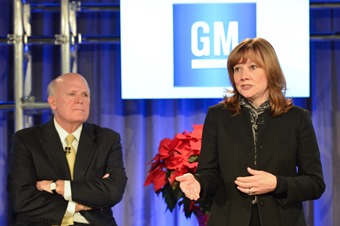 In February, General Motors (GM) began a recall that has grown to include 2.6 million vehicles due to the installation of a defective ignition switch The switches caused the ignition key to move from a running position to an accessory or off position while the car when moving and the sudden loss of power steering, as well as the disabling of power brakes and airbags caused at least thirteen people to lose their lives. GM has come under fire for the recall since the company was first made aware of the problem in 2001 and decided that it did not warrant taking action. There is also evidence that federal regulators were aware of the faulty ignition switches but failed to do due diligence in investigating GM. Additionally, since the company is not legally liable for accidents that occurred with its products before 2009 due to the bankruptcy filing, there are questions about whether GM was forthcoming to federal officials about the switches when it was bailed out. The incident has been dubbed “Switchgate” by some of the media and the company’s new CEO (as well as first female CEO) Mary Barra is now tasked with defending the company to Congress and restoring faith in a company that has seen its share of the American market decline over the last forty years.
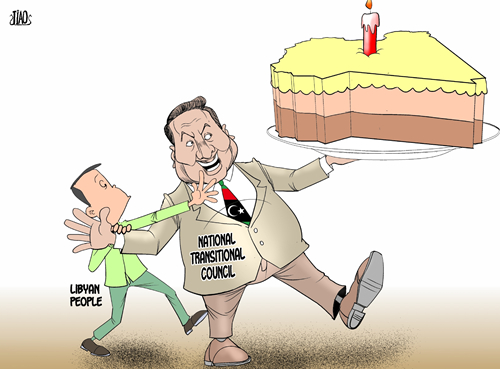 The “Arab Spring” of December 2010 created uprisings throughout the Middle East and North Africa and successfully brought down the existing governments of Tunisia, Egypt, and Libya. As extempers are aware, the Arab Spring, which has also been referred to as the “Arab Uprisings” by some Middle Eastern historians like Dr. Juan Romero of Western Kentucky University, has not produced more stability in the region and some countries that were affected are sliding back toward despotism. Egypt has a short-lived post-revolutionary government under the Muslim Brotherhood that was deposed by the Egyptian military in the fall of last year and Libya is struggling to regain its footing after deposing long time dictator Muammar Gaddafi (you will also see Gaddafi referred to in the media as “Qaddafi”). Libya is home to feuding tribal groups and militias, some of whom have seized the country’s ports and prevented oil from leaving the country. In some ways, Libya’s problems mirror those of Iraq after the United States invasion in 2003 where the central government, built around the personality of the main leader, collapsed and the interim government is finding it very difficult to piece the nation back together again. A big difference between the two is that the United States and its allies in the North Atlantic Treaty Organization (NATO) never officially put “boots on the ground” in Libya, so the interim government there has struggled to maintain order.
  In modern times, American policymakers have loved to declare war against a social or medical problem. In 1964, President Lyndon Johnson declared a war on poverty. In 1971, President Richard Nixon declared simultaneous wars against cancer and illicit drugs. And President George W. Bush declared a war on terrorism after the September 11th attacks. Fighting an idea or a long-term problem usually opens policymakers up to criticisms that such wars are unwinnable and unfairly raise public expectations. The war on drugs is a case in point, as the United States has committed billions of dollars over the last forty years to halt the use and smuggling of illicit drugs. In fact, prior to September 11th there were concerns that American forces would become involved in the Colombia civil war between its government and the FARC, a group of communist rebels that use the drug trade to bolster their coffers. The war on drugs has been criticized for punishing low-level offenders, which has had a disproportionate impact on minority males, and largely failing to solve America’s drug problem. Recently, heroin use in the United States has become a significant problem as the federal government has cracked down on prescription drug abuse and two weeks ago, on March 10th, Attorney General Eric Holder stated that the United States facing an “urgent public health crisis” concerning heroin. The death of Academy Award-winning actor Philip Seymour Hoffman last month due to an overdose of heroin and other drugs has also contributed to raising national awareness about this issue.
 Prior to the First World War in 1914, Argentina’s economy was considered one of the top ten in the world. Following the war, which disrupted the country’s economic advantages in trade, the country has experienced political upheaval, corruption, and pursued poor economic policies that have eroded what was once a beacon of wealth in Latin America. In 2002, the nation experienced the largest sovereign debt default in history and twelve years later some economists are fearing that it is heading down the same road. President Cristina Fernandez de Kirchner, who took power in 2007, has enacted populist economic reforms while attempting to consolidate her rule. However, these policies have eroded foreign investment, sparked high inflation, and are now beginning to create political unrest that threatens her hold on power. Extempers who read our brief earlier this season on Venezuela’s municipal elections will find some similarities between its economy and Argentina and this brief should be a useful tool for extempers that have to talk about the Argentinean economy or the rise and fall of populist and leftist policies in Latin America.
 Since the 1980s, when a deregulatory climate emerged in Washington D.C., American media companies have launched consolidation efforts to buy up smaller competitors to expand market share, taken control of national and local television stations, and merged with telecommunications companies to acquire a share of the nation’s Internet market. The proposed $45.2 billion merger between Comcast and Time Warner Cable, which would combine the nation’s top two cable companies, both of which also provide Internet access, has alarmed consumer advocates that worry it will harm consumers through higher prices and selective access to content. The principle of net neutrality, whereby all Internet content is treated equally by Internet Service Providers (ISPs), was established by the Federal Communications Commission (FCC) in 2010 to ensure that large media conglomerates could not prejudice certain forms of Internet content over others. However, in January a federal appeals court ruled that the FCC had no statutory (lawful) authority to enact those net neutrality rules based on the way that it has classified ISPs. A recent deal that Netflix, a streaming and DVD-based movie distribution service, made with Comcast is seen by consumer watchdog groups as the beginning of a “pay-to-play” Internet where content distributors will be forced to pay ISPs to access their networks or acquire satisfactory Internet speed so that they do not lose existing customers.