


[fblike]
 On February 22nd, Florentine mayor and Democratic Party (DP) leader Matteo Renzi became the youngest Italian prime minister. Renzi, who is thirty-nine years old, has promised a series of reforms to shake up Italy’s dysfunctional political and economic culture. While never holding office on a national scale, Renzi believes that he can use his first 100 days in office to get Italy moving again and restore it to its proper place as one of the major powers on the European continent. However, old political and economic habits die hard and political observers, which include some of those in Renzi’s own party, feel that he is all flash and no substance. Considering the fact that Italy is the third largest economy in the eurozone and that its economy has not fared well over the last two decades, Renzi comes at a crucial time in Italian history. A successful administration could put Italy back on the road to economic growth and a more stable political system, but a failure could dishearten the Italian population and lead to populist leaders taking power from either the political left or the right.
This topic brief will summarize Italy’s political and economic problems, discuss the reforms that Renzi has proposed, and evaluate whether he will succeed in reforming Italy.
Readers are also encouraged to use the links below and in the related R&D to bolster their files about this topic.
 For the last three decades, U.S. policymakers have grappled with the problem of illegal immigration, whereby immigrants from all parts of the world (not just Mexico) come to the United States and live and work without securing legal documents that allow them to do so. In 1986, the United States thought it could solve the problem with an amnesty package, but the number of illegal immigrants has increased since that time and it is estimated today that there are 11-12 million illegal (also called “undocumented” by immigration groups and their allies) immigrants in the U.S. today. In fact, studies have shown that since the 1990s, illegal immigration in the United States has largely outpaced legal immigration. Deporting all of these people would be taxing for the federal government and be a public relations nightmare. As a result, the federal government is caught in a tough position of how to deal with these 11-12 million people while ensuring that future waves of unlawful immigration do not happen again. In 2012, President Barack Obama promised action on immigration reform to address this issue and although the Senate passed a bipartisan immigration reform bill last June, the Republican dominated House has yet to do the same and has refused to take up the Senate bill. Due to the growing Latino population in the United States (although again, I would caution extempers that illegal immigration is not exclusively a Latino issue), immigration reform is likely to be a hot button political and social issue for quite some time and extempers need to have a firm grasp on the legislative history and possibilities of reform to answer questions about this subject.
 For the last two months demonstrations have been waged against the Ukrainian government of Victor Yanukovych. Yanukovych, who was elected to the presidency in 2010, triggered the protests by turning down an association agreement with the European Union (EU). The protests have only grown larger since Yanukovych’s governing party pushed through a controversial anti-protest law that stifled nearly all forms of free speech and to date, at least six people have died in clashes between protesters and security officials. Geopolitical analysts see Ukraine as a diplomatic battleground between the West and Russia and Ukraine’s political problems often pit the EU and the United States against Russia and its president Vladimir Putin. This means that questions about Ukraine often appear in rounds about Europe and American foreign policy over the course of a season and the current unrest in Ukraine makes it very likely that you could see a question about it at your state tournament.
 Since November 2003, when the Massachusetts Supreme Judicial Court ruled in Goodridge v. Department of Public Health that gay couples in Massachusetts had a right to marry, gay marriage has been a hot political topic. Some could also argue that the passage of the Defense of Marriage Act (DOMA) in 1996 made gay marriage a political issue, but the 2003 Massachusetts ruling in conjunction with San Francisco Mayor Gavin Newsom ordering his city to issue marriage licenses to gay couples in 2004 made the gay marriage debate a more prominent national issue. President George W. Bush was able to use state-level constitutional amendments that prohibited gay marriage to provide momentum to his re-election campaign in 2004 and push for a national constitutional amendment to ban the practice. Since 2004 the proponents of gay marriage have experienced significant judicial victories, with the Supreme Court invalidating an element of DOMA last year and four states legalizing gay marriage after the decision: New Jersey, Hawaii, Illinois, and New Mexico. Currently, seventeen states, along with the District of Columbia, recognize gay marriage and lawsuits are pending in federal courts to invalidate state constitutional amendments that prohibit gay marriage. Due to the growing number of lawsuits on the state level against gay marriage prohibitions, it only seems like a matter of time before the Supreme Court will have to weigh in about gay marriage again and extempers could confront questions about the constitutionality of gay marriage in the near future.
 On January 5th, Bangladesh held parliamentary elections that were marred by a widespread opposition party boycott and violence against supporters of Bangladesh’s governing Awami League and the country’s Hindu minority. The international community condemned the violence and has urged the Awami League to reach a political agreement with its main rival, the Bangladesh National Party (BNP) so that new elections can be held to create a legitimate government. Thus far, Prime Minister Sheikh Hasina has shown little willingness to compromise with the opposition. Bangladesh has been one of the global economic success stories since 1990 and has successfully reduced levels of poverty through international trade agreements. However, the recent political violence could ruin the country’s international image, its economic progress, and make it a center for Islamic extremism.
 Last week, on December 29th and 30th, two suicide bombings in Volgograd, a Southern Russian city formerly known as Stalingrad, killed at least thirty-four people and sent at least fifty others to the hospital. The town of Volgograd is located 400 miles from Sochi, where next month’s Winter Olympics will be held. Although no group has taken responsibility for the attacks as of the time of this brief, Russian security forces and international experts believe that the suicide attacks are listen to terrorist groups in the North Caucasus region of Russia, whose Muslim population has long sought self-government. Considering that Doku Umarov, a Chechen terrorist leader, proclaimed in July that he wanted to disrupt the Olympics, there are concerns in the international community that the Sochi Olympics would become a 2014 version of the 1972 Munich Games, which were marred by the murder of eleven Israeli athletes at the hands of Palestinian terrorists. Russian President Vladimir Putin is also facing international condemnation for his nation’s policies regarding homosexuals and the gradual erosion of democratic safeguards that were put in place after the fall of the Soviet Union in 1991. Due to these issues, it would not be surprising to encounter questions at tournaments over the next six weeks about the Sochi Olympics and whether Russia is capable of protecting the athletes and tourists attending the event and how it should respond to international criticisms of its domestic policies.
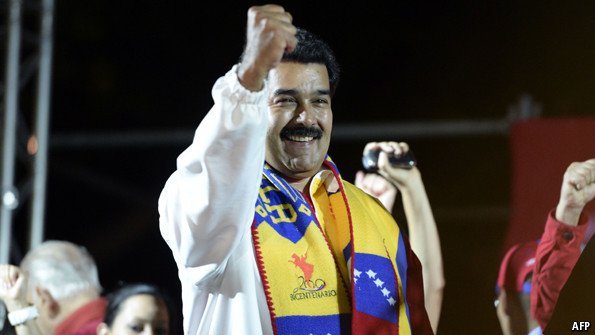 It has been a very tumultuous year in Venezuelan politics. In March Hugo Chavez, who governed the country for fourteen years and attempted to create a vibrant socialist movement in Latin America called Bolivarian Socialism, died of cancer and his successor Nicolas Maduro, a former bus driver and union activist, barely won the presidency in a disputed April election. In the midst of high crime rates and poor economic problems, Venezuela held municipal elections for 337 mayoral seats and 2,435 city council officials on December 8th. The opposition, named the Democratic Unity alliance (MUD), called for voters to reject members of Maduro’s Unified Socialist Party of Venezuela (PSUV) and turned the election into a national referendum. The election result ended up mixed, as PSUV won a higher percentage of ballots cast for its candidates, winning 49-43%, but the MUD won control of five of the country’s most populous cities, which include the capital city of Caracas. The next round of national elections are not scheduled until 2015 and the opposition are hoping to recall Maduro from office by 2016. However, the immediate result of the municipal elections may give Maduro some breathing room to consolidate his grip on power and handle Venezuela’s looming economic problems, which could impair the advancement of Bolivarian Socialism next year.
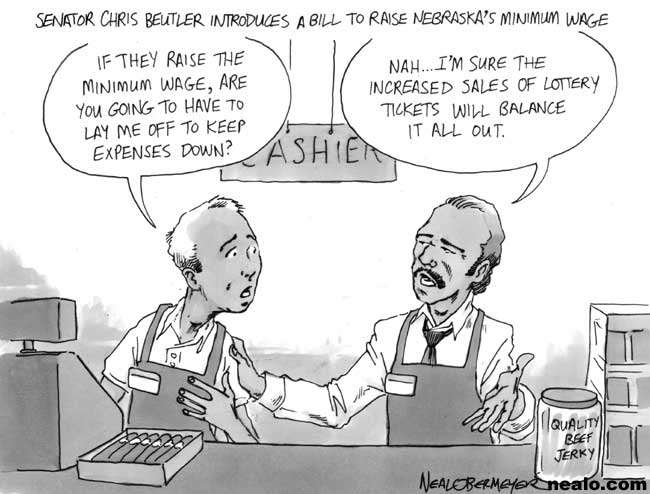 Since 2009, the federal minimum wage has been $7.25. The last time that Congress voted for a minimum wage increase was 2007, which occurred in the aftermath of the Democrats winning control of both houses of Congress for the first time since 1995. During last year’s State of the Union, President Barack Obama called for increasing the federal minimum wage and reiterated his support for this on December 5th. President Obama has supported a phased-in minimum wage hike to $10.10, which would go into effect in 2015. Congressional Democrats have supported the President’s plan and argue that a new minimum wage hike should also be indexed to inflation to ensure that minimum wage gains are not eventually diluted by depreciation. With twenty-one states having higher minimum wage levels than the federal government and recurring strikes taking place in the fast food industry, a topic that Extemp Central broke down a few months ago, the debate on a new minimum wage hike could impact the 2014 midterm elections by putting economic inequality back into the national spotlight.
 The United States invaded Afghanistan on October 7, 2001 to topple the country’s Taliban-led government, capture Osama bin Laden, and destroy al-Qaeda. The war has been America’s longest conflict and more than 2,000 American troops have been killed and more than 19,000 have been wounded. Since the Iraq invasion of 2003, Afghanistan has played second fiddle to the global war on terrorism and the war has largely been ignored by the national media since President Obama assumed office in 2009. Although President Obama committed more American forces to Afghanistan, which emulated the “surge” strategy used in Iraq in 2007, America’s presence in the country is beginning to wind down. 2014 marks the end of the North Atlantic Treaty Organization’s (NATO) combat mission and the United States is trying to negotiate a bilateral security agreement (BSA) with Afghan President Hamid Karzai that would allow American forces to remain in the country to train Afghan soldiers and continue counterterrorism operations. However, while Afghan elders have approved of the BSA, President Karzai has said that he will not sign the agreement until after Afghanistan holds presidential elections in April. He has also issued new conditions that the United States must agree to in order to get him to sign the BSA. The United States argues that Karzai cannot wait that long to sign the agreement and that if he fails to do so soon they will withdraw all combat forces from the country by the end of the 2014.
 Last week Secretary of Education Arne Duncan sparked a firestorm over the controversial Common Core State Standards (CCSS), which are aimed at raising education standards nationwide to meet college and career ready targets. Addressing criticism of the standards, Duncan argued that white, suburban mothers were angry because their children and schools were not as good as they felt they were. Forces that oppose Common Core standards immediately called for his resignation and he apologized for his comments several days later. The firestorm over Common Core standards is one of the most interesting domestic issues because it is one issue where far-left and far-right forces find areas of agreement.
 Two weeks ago, India launched its Mangalyaan mission to Mars. The mission, which will take ten months to reach Mars, is intended to study the Martian atmosphere and conduct scientific tests to determine if any forms of life exist on the Red Planet. If India’s mission is successful, it would become the first Asian nation to launch a successful Martian mission and it would become the first nation to successfully reach Mars in its first mission attempt. Success would also increase the prominence of the Indian space program, which launched a successful lunar mission in 2008. Since China is considered the preeminent space power in Asia, having already placed a men and women in Earth’s orbit and having more powerful rockets than India, analysts are speculating that India’s Mars mission could inaugurate a space race between both powers, setting the tone for twenty-first century space exploration.