


[fblike]
.gif/490px-New_Saudi_Arabia's_traffic_sign_(women2drive).gif) Two weeks ago, women in Saudi Arabia staged a protest against the country’s ban on female driving. The campaign that launched the protest, called Women2Drive, began in 2011 and has attempted to place pressure on the Saudi government to lift what they feel is an onerous restriction on women. Saudi Arabia is one of the world’s largest oil producers and a key American ally in the Middle East. Extempers often receive questions about Saudi Arabia concerning terrorism, the Israeli-Palestinian peace process, Iran’s nuclear ambitions, and oil issues, but the issue of women’s rights may soon factor into those rounds as well. Saudi Arabia is one of the more conservative states in the Middle East and is still run by a king, with no elected national legislature. The kingdom staved off the unrest of the 2011 Arab Spring, but the government is worried that issues like women’s rights may harm the kingdom’s international profile and lead to larger protests against it in the near future.
Two weeks ago, women in Saudi Arabia staged a protest against the country’s ban on female driving. The campaign that launched the protest, called Women2Drive, began in 2011 and has attempted to place pressure on the Saudi government to lift what they feel is an onerous restriction on women. Saudi Arabia is one of the world’s largest oil producers and a key American ally in the Middle East. Extempers often receive questions about Saudi Arabia concerning terrorism, the Israeli-Palestinian peace process, Iran’s nuclear ambitions, and oil issues, but the issue of women’s rights may soon factor into those rounds as well. Saudi Arabia is one of the more conservative states in the Middle East and is still run by a king, with no elected national legislature. The kingdom staved off the unrest of the 2011 Arab Spring, but the government is worried that issues like women’s rights may harm the kingdom’s international profile and lead to larger protests against it in the near future.
This brief will talk a lot about the Women2Drive protests, but will put that debate in the context of women’s rights in Saudi Arabia. It will explain the status of women in the kingdom, provide an overview of the Women2Drive protest, and then provide some analysis about the future of the Women2Drive movement and Saudi Arabia’s potential handling of the issue.
Readers are also encouraged to use the links below and in the related R&D to bolster their files about this topic.
 Last Thursday, President Barack Obama signed an agreement to end the first government shutdown in nearly twenty years. The shutdown, which lasted sixteen days, coincided with another debt ceiling crisis since the Treasury Department’s borrowing authority needed to be raised by October 17th. The threat of not raising the debt ceiling is what compelled Senate Majority Leader Harry Reid and Senate Minority Leader Mitch McConnell to craft a compromise piece of legislation that passed the Senate and House last week. However, their compromise creates the possibility of another government shutdown in January and another debt ceiling crisis in February.
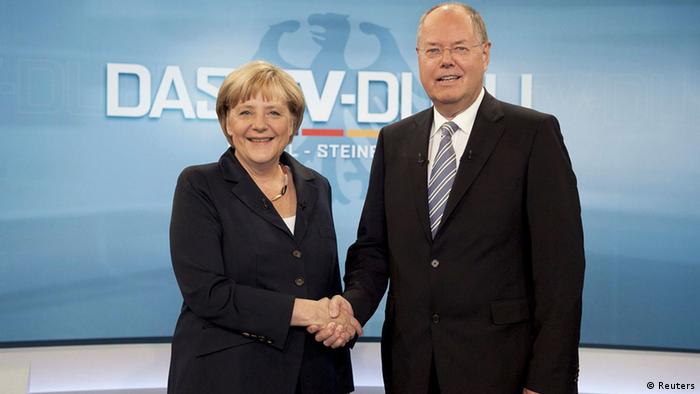 On September 22nd, German voters handed Chancellor Angela Merkel her biggest electoral triumph and put her in a position to lead her third consecutive government. Merkel’s center-right Christian Democratic Union (CDU) and its sister party, the Christian Social Union (CSU) took 41.5% of the vote. The Social Democratic Party (SPD) took second place with 25.7% of the vote and the communist leaning Left Party took 8.6% of the vote. However, the CDU/CSU only won 311 seats in the 630 seat German Bundestag, which leaves it five seats shy of a majority. The CDU/CSU’s coalition partner, the Free Democratic Party (FDP) failed to win representation in parliament for the first time since 1949, so the CDU/CSU must now enter into a coalition with the SPD or the Green Party, which took 8.4% of the vote, to govern the country. A failure to form a new coalition would inaugurate new elections. The German election was watched closely by European political observers because Germany’s economy is the largest in Europe and it guides a great deal of European Union (EU) policy. A Merkel defeat might have spelled significant changes for how the EU is handling debtor countries like Greece and further complicated the process of European integration. Her victory shows that German voters have endorsed her handling of the German economy through the euro zone crisis that began in 2010.
 By October 1st Congress must pass legislation to fund the annual expenses of the federal government for the next fiscal year. If it does not, a government shutdown will ensue where many government operations will cease, although programs that do not receive their funding directly from the Treasury, provide for national defense, or conduct essential services will continue. Speaker of the House John Boehner (R-OH) hoped to avoid a showdown with the White House in what would be the first fiscal showdown since 2011, but Tea Party Republicans have pressured he and other members of the House Republican leadership to pass a spending measure that would fund the government in the short-term and deny funding for Obamacare, which is set to begin on October 1st with the opening of signups on state insurance exchanges. President Obama and Senate Democrats argue that the spending measure passed by the House is a non-starter and if a compromise is not reached by October 1st it would result in the first government shutdown since 1995-1996. The battle over the shutdown also touches on the nation’s credit rating, since the debt ceiling will have to be raised to avoid a potentially damaging default.
 Extempers are probably filing a great deal of articles at the moment about the ongoing conflict in Syria. The United States is preparing for a possible intervention there, but it is important to go back to a conflict that also involved some of the current issues regarding Syria: a country that is under the rule of a tyrant, questions of weapons of mass destruction use, and uncertainty about who will fill the power vacuum if that tyrant is eliminated. The invasion of Iraq in March 2003 was supposed to inaugurate a process of nation building in the Middle East, whereby Iraq would be a beacon of democracy for other Middle Eastern nations. Ten years later and two years after the withdrawal of American troops, Iraq is witnessing an increase in sectarian violence, at its highest levels since 2008 and there are fears that if Iraq descends into anarchy and violence that the sacrifices of American and coalition personnel made in the 2003 invasion and occupation were for naught. The U.S. media has largely ignored Iraq over the past year, focusing most of its attention on Syria and other uprisings in the Arab world. However, this neglect is unwarranted, as Iraq could have significant implications for American foreign policy in the region.
 Last Thursday, thousands of fast food workers in sixty cities went on a one-day strike to protest their inability to form unions and low wages. Organized by the Service Employees International Union (SEIU) and community organizing groups and taking place a day after the fiftieth anniversary of the March on Washington, the protests captured the interest of the national media and sparked a discussion about the state of the nation’s economy, what constitutes a living wage, and the possibilities of unionizing a sector of the economy that has thus far resisted such efforts.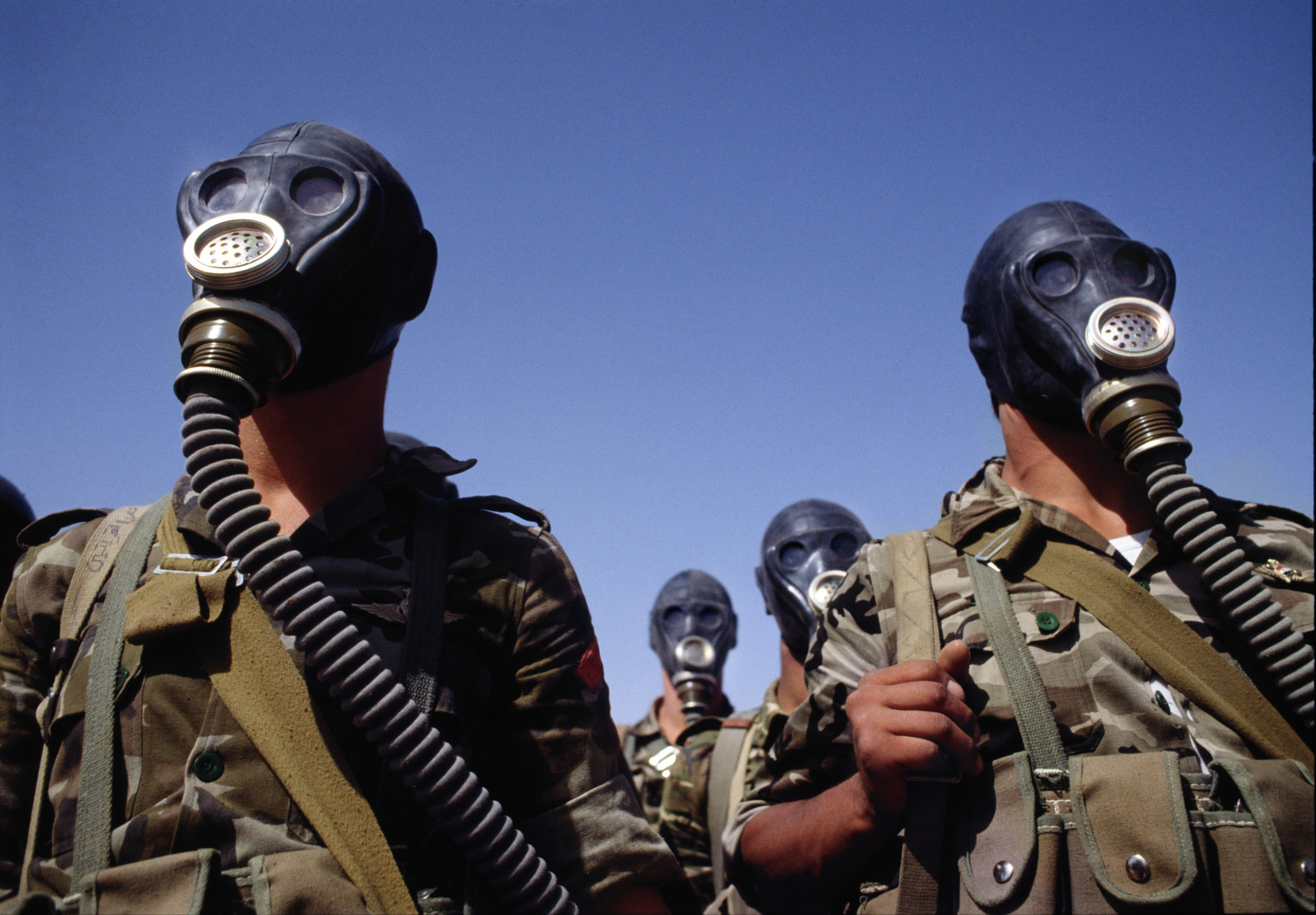
 Since 1979, when Egypt was a signatory to the Camp David Accords with Israel, whereby Egypt normalized its relations with Israel in exchange for the Sinai Peninsula, the United States has maintained strong military and diplomatic ties with the Egypt. Today, the United States government provides an estimated $1.5 billion in aid to the Egyptian military. American foreign policy views Egypt as a bulwark against unrest in the Middle East and a constructive player in the Israeli-Palestinian dispute. However, that foreign policy view left the United States backing Egyptian strongmen like former President Hosni Mubarak, who ruled the country under a state of emergency for nearly thirty years. The Arab Spring in Egypt in 2011 ousted Mubarak and brought to power the Muslim Brotherhood, an Islamist political organization and religious social organization, which had been declared an illegal organization after it was accused of trying to assassinate Egyptian Prime Minister Gamal Abdel Nasser in 1954. After being unable to stabilize the country politically or economically, protests against the Brotherhood’s rule were launched in June, which culminated in a military coup on July 3rd that installed a provisional government headed by Supreme Constitutional Court Chief Justice Adly Mansour. In light of the military government’s recent crackdown on sit-ins launched by the Brotherhood six weeks ago to pressure the provisional government to step down, which caused the deaths of at least 600 people, the United States and the Egyptian governments are in a tricky situation. Should the U.S. end its military aid to Egypt and risk alienating its governing authorities? How would that affect the geopolitical situation in the Middle East? Also, what is the effect of this unrest on Egyptian society and is there a way for the Egyptian provisional government to put the country on the path towards peace, prosperity, and political reconciliation?
 On July 18th, Detroit filed for bankruptcy, making it the biggest municipal default in American history. Contemporary observers of the city would be hard pressed to tell that it was once one of the fourth most populated cities in the country and produced three-quarters of America’s war machine in the Second World War. Detroit’s bankruptcy has been decades in the making, a consequence of political corruption, deindustrialization, globalization, “white flight,” and poor budgeting. Given that Detroit’s tenure in bankruptcy court will likely last until the end of 2014, if not beyond, extempers will face a host of questions this season about how Detroit got to this point, how it can fix its debt, whether the federal government should come the assistance of the beleaguered city, and what impact its bankruptcy may have on the rest of the United States, namely those cities who are approaching the same fiscal cliff that Detroit has already driven off of.
 Judicial issues is a topic area that United States extempers face, usually at NFL Districts and the NFL National Tournament, although it is also a topic that can find itself used at local and state tournaments as well. The judicial branch is one of the three branches of the U.S. national government and plays a vital role in defining the U.S. Constitution and weighing in on heated political, social, and economic issues. This topic brief will break down some of the major issues that extempers might have to discuss on the judicial issues topic area and things they want to keep in mind when answering these questions.
 Until early November, extempers can expect to run into lots of questions about the midterm elections. These questions may ask you which party will win the elections, what the biggest issue in the elections is going to be, or about specific races happening throughout the country. Usually, if you get a question about a specific race it will be about a Senate or governor’s race because those typically attract more attention than House races. Extempers should have files on the major races and get to know the candidates in those races. To get an idea of what the major races are, extempers should go to the Cook Political Report or Real Clear Politics and see the races that are classified as “tossups.” The “tossup” label designates races where the Democratic and Republican candidates have a chance to win. If you are new to extemp, you will see this labels again in 2012 for the presidential campaign.