


[fblike]
 Today’s R&D is brought to you by Prepd, the only software built specifically for extemp. Prepd makes it easy to research, practice, and compete! Visit www.prepd.in to learn more. Like Prepd on Facebook for special info and contests.
This R&D covers wage growth in the U.S. economy. Although the U.S. economy is improving, wage growth for Americans has lagged behind, with hourly wages rising 0.5% last month. Economists are optimistic that significant wage growth could take place in 2015, as businesses such as Wal-Mart have recently decided to raise the pay of its workers to $10 an hour. If wage growth takes off, it could compel the Federal Reserve to raise interest rates in order to temper inflation in the economy. Creating better wage growth is also a rallying call for those who seek to reduce income inequality in the United States.
Those who switched jobs in the 4th quarter of last year saw 3x the wage growth of those who stayed put: http://t.co/eLqgEAp3wy
— Forbes (@Forbes) February 23, 2015
500K workers will get a raise. How will this affect US wage growth? Wal-Mart Plans to Lift Pay of US Workers http://t.co/tuR4AAP0jX via @WSJ
— Kathleen Madigan (@MadiganWSJ) February 19, 2015
“The job market is unquestionably improving, and at a nice clip. But wage growth is not heating up:” notes http://t.co/GxljhzN9J9
— CharlotteWorks (@CharlotteWorks) February 16, 2015

 As 2014 draws to a close, one of the biggest news stories is the growing American economy. While the U.S. economy officially exited from the Great Recession in June 2009, Americans have remained pessimistic. They worry about whether the economy will continue to be robust for future generations, how there are still a large number of part-time workers that wish they could work full-time, and the impact of globalization and immigration on job growth. Last week, the Commerce Department revised its third quarter numbers for America’s gross domestic product (GDP). It found that the economy grew by 5% between July and September, which is the largest quarter of economic growth that the country has experienced since 2003. A rise in exports, falling oil prices, and enhanced consumer spending accounted for the figure and economists are optimistic that America’s economy is heading toward a period of sustainable growth. Since extempers will face questions about the U.S. economy several times at various tournaments in the second semester, Extemp Central thought it was proper to provide a topic brief breaking down America’s economic performance in 2014 and assess its prospects for 2015.
 Here is today’s premium R&D to accompany
  Since June, the price of oil has plunged 40% on the international market in response to economic slowdowns in Europe and Asia and a glut of supply from the Middle East and North America. The falling price of oil, near $60 a barrel at the time of the writing of this brief, has been a boon for nations that import fossil fuels. It also provides much needed stimulus for consumer-driven economies such as the United States as people are able to take the money they would normally spend on high gas prices and direct it to other economic activities. However, the falling oil price has worked against some economies that rely largely on the proceeds from oil exports. Countries such as Venezuela, Russia, and Nigeria, among others, are now left wondering how they will react to the sudden fall of global oil prices and the decisions that they make could determine whether their current governments survive.
 Here is today’s premium R&D to accompany
  The first Friday of every month sees the Bureau of Labor Statistics (BLS) reveal the previous month’s unemployment rate. Since the Great Recession of 2008 the BLS’s monthly announcements have been anticipated by political actors who wish to use the unemployment numbers to advance their agendas. The media also provides a lot of coverage of the recent unemployment data and use it to measure the health of the economy and the pace of America’s economic recovery. Last week the unemployment rate for December was announced as 6.7%, which is the lowest unemployment rate since October 2008. The initial reaction was to treat this as good news since the unemployment rate has fallen since 2010, when it reached a height of 9.9%. However, economists expressed worry that the unemployment rate is not reflecting actual events in the economy because the economy only added 74,000 jobs in December and the reason the unemployment rate is going down is because fewer Americans are looking for work.
 Here is today’s premium R&D to accompany
 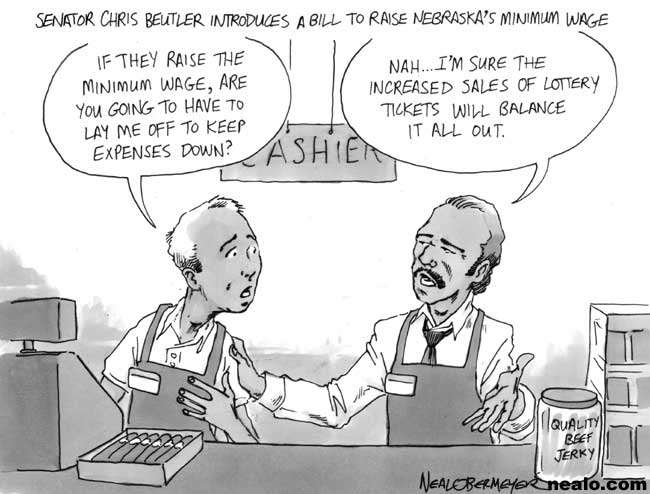 Since 2009, the federal minimum wage has been $7.25. The last time that Congress voted for a minimum wage increase was 2007, which occurred in the aftermath of the Democrats winning control of both houses of Congress for the first time since 1995. During last year’s State of the Union, President Barack Obama called for increasing the federal minimum wage and reiterated his support for this on December 5th. President Obama has supported a phased-in minimum wage hike to $10.10, which would go into effect in 2015. Congressional Democrats have supported the President’s plan and argue that a new minimum wage hike should also be indexed to inflation to ensure that minimum wage gains are not eventually diluted by depreciation. With twenty-one states having higher minimum wage levels than the federal government and recurring strikes taking place in the fast food industry, a topic that Extemp Central broke down a few months ago, the debate on a new minimum wage hike could impact the 2014 midterm elections by putting economic inequality back into the national spotlight.
 Here is today’s premium R&D to accompany
  Last Thursday, thousands of fast food workers in sixty cities went on a one-day strike to protest their inability to form unions and low wages. Organized by the Service Employees International Union (SEIU) and community organizing groups and taking place a day after the fiftieth anniversary of the March on Washington, the protests captured the interest of the national media and sparked a discussion about the state of the nation’s economy, what constitutes a living wage, and the possibilities of unionizing a sector of the economy that has thus far resisted such efforts.
 Bernanke says global recovery depends on emerging markets, central banks